
2025 Advancing Research Grants for Indigenous Politics Recipients
In December 2025, APSA awarded 20 projects for the APSA Diversity and Inclusion Advancing Research Grants for Indigenous Politics for a combined award amount of $40,000. Read about the funded research projects below.
Project Title: Threatened Reactions to Indigenous Population Growth
Researcher Bio:
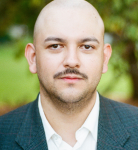
Marco Aviña, Harvard University
Marco Aviña is a Ph.D. candidate and a James M. and Cathleen D. Stone Ph.D. Scholar in Inequality and Wealth Concentration in the Department of Government at Harvard University. Marco studies how diversity, inequality, and exclusion shape public opinion and political behavior. His dissertation examines the nexus between race and class in the U.S. and argues that the brand of identity politics championed by the Democratic Party in recent elections has primarily catered to white, affluent members of the coalition, not the disadvantaged groups it claims to represent. More broadly, his research agenda involves (re)assessing contextual effects in politics, fostering inclusion through persuasion, and interrogating the notion of an identity-to-politics link.
Andreea Zota, Université de Montréal
Andreea Zota a Ph.D. candidate in criminology at the Université de Montréal, supervised by Jo-Anne Wemmers. Her research examines Canadian attitudes toward Indigenous peoples to raise awareness of ongoing inequalities and to advocate for reparations in the aftermath of settler colonialism. She is also interested in studying and strengthening victims’ rights. Alongside Andreea’s academic work, she serves as coordinator of the Justice Centre for Victims of Crimes (CJVAC). Her research is supported by the Fonds de recherche du Québec and the Social Sciences and Humanities Research Council.
Project Title: Recognition, Identity, and Community Resistance in Latin America’s Armed Conflicts
Researcher Bio:
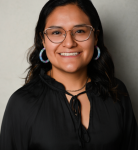
Sofía Berrospi, Vanderbilt University
Sofía Berrospi is a fourth-year PhD candidate in political science at Vanderbilt University. Her research focuses on Indigenous politics, identity, collective action, state-building, conflict, and violence. Her dissertation book project examines how different forms of state recognition shape intra- and inter-communal dynamics, and how these dynamics, in turn, influence patterns of violence and resistance during civil armed conflicts. The project focuses on Indigenous communities in Peru and Mexico.
Project Title: Power to Prosper: Self-Governance and Economic Development
Researcher Bio:
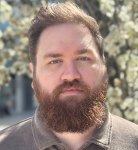
Nick Brouwer, University of California, Merced
Nick Brouwer is currently a PhD candidate in political science at the University of California, Merced. His research focuses on local and American Indian tribal political economy, as well as the application of remote sensing data and spatial research designs in American politics. His dissertation explores the economic impacts of tribal governance, particularly the impacts of tribal self-governance and the importance of governance capacity and accountability. He has a number of on-going projects related to measuring tribal government institutions, legislator behavior, and reservation migration. His research has been published in journals such as the Annual Review of Political Science and the Journal of Political Institutions and Political Economy.
Project Title: Streamlining or Steamrolling? Permitting Reform and the Challenge of Upholding Free, Prior, and Informed Consent for Indigenous Peoples
Researcher Bio:
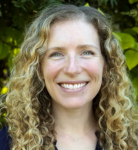
Savannah Carr-Wilson, Duke University
Savannah Carr-Wilson is a third-year PhD candidate in the UPEP (Environmental Policy) program at Duke University. Her research interests include critical mineral mining in the context of energy transition, Indigenous rights, energy access, and renewable tech end-of-life management. Her dissertation research focuses on what governance strategies enable critical mineral mining to proceed in a just and sustainable way that earns community approval. She is examining various facets of this topic using qualitative and mixed methods, legal analysis, and systematic literature review. One of her chapters examines the impact of mine permitting reform in Canada and the US on Indigenous peoples and their rights. Prior to her PhD, she worked as a lawyer in the fields of environmental, Aboriginal, and Indigenous law in Canada. She has published articles in Energy Research & Social Science and Case Studies in the Environment and is the author of the book, Total Transition: The Human Side of the Renewable Energy Revolution.
Project Title: Reassembling Bison Relations: Cultural Resurgence and Bioscience in Bison Programs on Tribal Nations in New Mexico
Researcher Bio:
Charlotte Dawson, University of Arizona
Charlotte Dawson is a Ph.D. candidate in sociocultural anthropology with a minor in American Indian studies at the University of Arizona. Her research interests include multispecies ethnography, environmental anthropology, Indigenous cultural heritage, settler-colonialism, and community-based methodologies. Using collaborative and Indigenous research methods that center Indigenous worldviews and goals, she examines how environmental resource management logics are enfolded into existing Indigenous multispecies governance and economic systems to support cultural resurgence.
Project Title: Reclaiming Governance: Institutional Exclusion, Collective Action, and Indigenous Authority in Alaska
Researcher Bio:
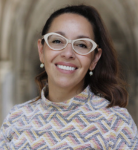
Sonja Castañeda Dower, University of Chicago
Sonja Castañeda Dower is a PhD candidate in political science at the University of Chicago. Her research examines government efforts to reorganize or centralize political authority, often reflected in campaigns to consolidate control over land, resources, or populations. Drawing on quasi-experimental designs, archival research, and field-based case studies — including administrative and survey data, interviews, and village-level testimony and records — her dissertation analyzes historical and contemporary Indigenous–state relations in the United States, with comparative extensions in the Arctic and Oceania. She is especially interested in how institutional design shapes political participation and collective organization in longstanding democracies. Her research shows that, in these settings, assimilationist and incorporative reforms often leave behind durable arrangements that constrain central government authority — visible, for example, in land settlements, resource regimes, and systems of environmental co-management. Sonja holds an MA in political science from the University of Chicago, an MA in politics and education from Columbia University, and a BA in English literature from the University of Wisconsin–Madison.
Project Title: Extractivism On The Defense: Mining Capital, The Neoliberal State, And Community And Indigenous Power In Central America
Researcher Bio:
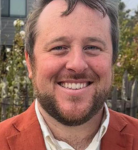
Nathan Edenhofer, University of California, Santa Cruz
Nathan Edenhofer is a PhD candidate in the Politics department at the University of California, Santa Cruz. His research focuses on conflict, social movements, and the political economy of extractivism in Latin America, especially Central America. His research has been published in The Journal of Latin American Studies and is forthcoming in The Extractive Industries and Society and the Edward Elgar Handbook of Resource Nationalism. He is a member and rotating coordinator of the UC Santa Cruz-based Extractivism and Society Research Cluster. Nate’s dissertation focuses on how anti-mining struggles waged by rural and Indigenous communities over 25 years in Guatemala and Honduras have paralyzed or prevented the majority of metal-mining projects in each country, despite hostile political conditions and the opposition of powerful transnational companies. Indigenous participatory institutions of “prior consultation” became terrains of struggle in the process, as did Indigenous identity itself. Answering how rural and Indigenous movements put extractivism on the defensive provides empirical and theoretical lessons on power and organization in social movements, the contradictions of the capitalist state, and the strategies that elites take to try to dissolve opposition.
Project Title: Unearthing the Palimpsest: Indigenous Sovereignty, Diplomatic Negotiations, and International Relations Otherwise
Researcher Bio:
Tomas Hatala, Carleton University
Tomas Hatala is a PhD candidate at Carleton University in Ottawa, Canada. He examines the meanings of sovereignty within the multilayered legal framework of British Columbia vis-à-vis the First Nations. His research focuses on the Columbia River Treaty’s renegotiation process, specifically examining how the claims of the First Nations within the region are articulated within the broader context of the political and legal frameworks that overlap the territory. Underpinning these tensions is the question of how rivers – as a space upon which laws and treaties are inscribed and enacted – are perceived and understood by the various groups involved. The framework of sovereignty is useful as a conceptual building block of international relations for seeing how the “international” itself must be reconfigured when international negotiations involve both state and Indigenous actors. Tomas has an MA degree in communication from Simon Fraser University where he examined the regional shift toward the Left in Latin America (e.g. the “Pink Tide”) and an MA in political science from Concordia University where he analyzed the consultation process the Canadian and USA states undertook to involve stakeholders throughout the Columbia River Basin.
Project Title: Pūkuʻi: Binding Knowledge, Refusing Pathologies
Researcher Bio:
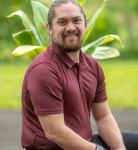
Kamalani Johnson, University of Hawaiʻi, Mānoa
Kamalani M. F. H. Johnson (he/him) is an interdisciplinary Kanaka Maoli scholar whose research mobilizes Hawaiian studies, critical Indigenous studies, translation studies, ecocriticism, and Indigenous feminist methods to analyze the history and politics of the 19th and early 20th centuries of Hawaiʻi. He is a PhD candidate in political science at the University of Hawaiʻi, Mānoa.
Project Title: Finding Decolonial Cracks in Planning and Policy
Researcher Bio:
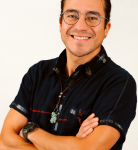
Joaquín Lopez-Huertas, University of Utah
Joaquín Lopez-Huertas (Am’aj Q’in) is a Mayan K’iche’ scholar from Xelajuj No’j located in the place known as Guatemala. He is a Ph.D. candidate in city & metropolitan planning at the University of Utah. With more than ten years of working with Indigenous communities in regions of Guatemala, Chile, and the US, Joaquin’s research focuses on Indigenous planning and the intersections with climate change, urban design, and land use policy through decolonial practices. Particularly, Joaquin delves into the ways Indigenous peoples restore relationships with place, foster community organizing, respond to environmental injustices and reimagine Indigenous cities. Joaquin received the Fulbright LASPAU scholarship and the GCSC fellowship for his doctoral studies. Before coming to Utah, Joaquin was a lecturer at the Universidad de San Carlos de Guatemala and an OAS fellow at the Universidad de Valparaíso in Chile.
Project Title: Using the Collaborative Multiracial Post-Election Survey (CMPS) data to Explore AIAN Health
Researcher Bio:
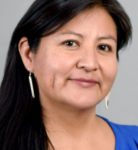
Tennille Larzelere Marley
Tennille Larzelere Marley (Dzil Ligai Sian N’dee – White Mountain Apache) is an associate professor of American Indian studies. She earned her PhD in sociology, focusing on the sociology of health, from the University of New Mexico in 2013, and holds an MPH and a bachelor’s degree in elementary education from the University of Arizona. Dr. Marley’s work is grounded in the American Indian Studies (AIS) paradigm, which centers sovereignty and Indigenousness to protect and strengthen Indian sovereignty, self-determination, self-sufficiency, and human rights. She emphasizes oral history, traditional knowledge, and collaborative partnerships with American Indian nations and communities, integrating Indigenous and non-Indigenous ways of knowing. This paradigm frames research, teaching, and service as a sacred responsibility and guides all aspects of her academic work. Her research is informed by her upbringing on the White Mountain Apache Reservation and by the social determinants of health. She examines the social and structural forces — often unique to sovereign Indigenous nations — that shape American Indian health, with particular attention to racial residential segregation. She has also published on Indigenous data sovereignty and the obligations of researchers and universities to American Indian nations.
Project Title: Self-Transformation for Self-Governance: The Ethics of Ea in the Hawaiian Movement for Life
Researcher Bio:
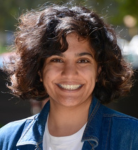
Natasha Patel
Natasha Patel is a PhD candidate in political science. Her work theorizes about social movements, especially those that seek to address deep, structural causes of contemporary problems. In her case examples, Hawaiian Sovereignty, Prison Industrial Complex Abolition, and Christian Dominionism, she asks: “why do some movements that seek vast structural change ask their members to undergo a highly localized politics of personal transformation?” The research reveals why some “highly aspirational” political movements theorize a strong connection between structural transformation and personal transformation and encourages us to consider how personal practices are socially transformative.
Project Title: Reclaiming the Numbers: Indigenous Data Sovereignty and the 2019 Native Hawaiian Survey
Researcher Bio:

Ngoc Phan, Hawaiʻi Pacific University
Ngoc Phan, PhD, is an associate professor of political science at Hawaiʻi Pacific University. Her research focuses on Indigenous politics, civic engagement, and political participation, with particular attention to Native Hawaiian communities. Using mixed methods and community-based participatory research, Dr. Phan examines how colonial legacies, social determinants, and community networks shape activism, well-being, and political behavior. She leads several collaborative research initiatives, including the 2019 Native Hawaiian Survey, the Healthy Hawaiian Project, and the Hawaiian Activists Project, and is committed to mentoring undergraduate researchers from underrepresented backgrounds. Her work contributes to political science by advancing Indigenous-centered approaches to the study of participation, representation, and policy.
Project Title: Instruments of the Soul: A New Encounter with Native American Thought
Researcher Bio:
Samuel Piccolo, Baruch College, CUNY
Samuel Piccolo is a political theorist and assistant professor of political science at Baruch College, CUNY. His research and teaching cover a range of contemporary and historical issues, from Native American political traditions and classical political thought, to liberalism and technology. His peer-reviewed work has been published in venues including American Journal of Political Science, Journal of Politics, American Political Thought, European Journal of Political Theory, and Security Studies. He is the author of the forthcoming monograph “Instruments of the Soul: A New Encounter with Native American Thought,” and the co-editor (with A. James McAdams) of the volume Far-Right Newspeak and the Future of Liberal Democracy (Routledge, 2024).
Project Title: Indigenous Diplomacy in the United Nations: the Case of Groups from the Brazilian Amazon
Researcher Bio:
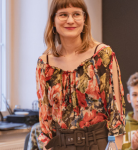
Zuzanna Piotrowicz, Jagiellonian University
Zuzanna Piotrowicz (she/her) is a first-year PhD candidate in the interdisciplinary political science program at the Jagiellonian University in Cracow, where she also completed degrees in Latin American studies (2023) and international relations (2025). Her research focuses on Indigenous diplomacy within the UN system, with a particular emphasis on groups from the Brazilian Amazon. In her work, she examines extractivism (including epistemological extractivism), socio-environmental justice, Indigenous resistance and tensions arising from differing understandings of sovereignty held by Indigenous groups and nation-states. She is also a co-organizer of the recurring international conference Latin American Culture Days at the Jagiellonian University.
Project Title: Native American Death Pedagogy: Overcoming Settler Colonialism and the Western Death System Towards Land-Informed Possibilities and Futurities
Researcher Bio:

Rye Purvis, University of California, Davis
Rye Purvis is originally from Moriarty, New Mexico and is enrolled member of the Navajo Nation. She is a PhD candidate in the Native American Studies Department at University of California, Davis. Rye received an Associates of Science in the Funeral Service Education program at American River College in December 2023. Her research is about advocating for Native American death and dying socio-political frameworks through the fields of death studies and death education. Death studies and death education includes research and literature on laws, policies, healthcare, environmental justice, medical science, religion, and human rights. This research aims to not only begin to recognize and uplift Native American presence and challenge educational knowledge gaps that have failed to meet communities needs in death and dying but ultimately reinforce the self-determination of Tribes in the cyclical care of community and land.
Project Title: Measuring Indigenous Protest during Allotment
Researcher Bio:
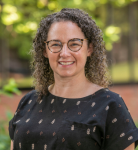
Emily Ritter, Vanderbilt University
Dr. Emily Ritter is an associate professor of political science and the Director of Graduate Studies at Vanderbilt University in Nashville, Tennessee. Her research centers on the strategic relationship between government repression and dissent activities, with particular attention to the methodological implications for causal inference that stem from strategic conflict behavior. Different projects contribute to scholarship on international human rights institutions, law, and practice; domestic conflict between national governments and groups from the population; bureaucratic mechanisms of state repression; institutional solutions to bargaining and cooperation problems; and political methodology.
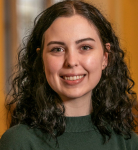
Jennifer Barnes, Vanderbilt University
Dr. Barnes is a research professional at the Center for the Study of Global Issues at the University of Georgia, a member of the Methodology, Research, and Design Team for the Human Rights Measurement Initiative, and a principal researcher for the Political Terror Scale Project. She is a Ph.D. candidate at Vanderbilt University and holds a B.A. in political science from the University of North Carolina at Asheville. Her research focuses on state repression, human rights, and how these concepts can be best measured and evaluated.

Kai Keltner, Vanderbilt University
Kai Keltner is an undergraduate student at Vanderbilt University with majors in public policy and economics and a minor in data science. He has worked on this project for two years and is currently applying to PhD programs in political science and political economy.
Project Title: Courting Indigenous Authority: Traditional Endorsements and Electoral Behavior
Researcher Bio:
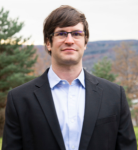
Pablo Scuticchio, Cornell University
Pablo Scuticchio is a PhD candidate in government at Cornell University whose research focuses on criminal governance and public-security preferences in Latin America. His dissertation examines public attitudes toward punitive policing and state–cartel negotiations, and how emotions such as fear and anger shape these views. His work also engages questions of migration and Indigenous politics. He holds a BA in international relations from Universidad Torcuato Di Tella and an MA from Johns Hopkins SAIS.
Project Title: When Tradition Travels: Customary Institutions in Pakistan’s Largest City
Researcher Bio:
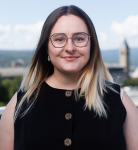
Sarah Thompson, Cornell University
Sarah Thompson is an assistant professor in the Department of Government at Cornell University. She received a PhD and MA in political science from Stanford University and a BA in political science from Columbia University. Her research centers on indigenous and traditional governance institutions in South Asia (Pakistan) and in Mexico. In this work, she is particularly interested in questions of gender, usage of state and non-state dispute resolution and policing, and legitimacy. Her work combines experimental methods and qualitative fieldwork and has been published in the American Political Science Review.
Project Title: “Municipalities’ Attempt at Resettlement of Western Lands and Waters: Indigenous Peoples’ Resistance and Adaptation within the Owens Valley and San Diego Water Conflicts (1911-1944)”
Researcher Bio:
Chantal Walker, University of California, Davis
Chantal Walker is a Ph.D. candidate at the University of California, Davis. She received an M.A. in American Indian studies from the University of California, Los Angeles, and her undergraduate degree in history from California State University, Dominguez Hills. Her research prioritizes history that serves public audiences and Indigenous peoples. Currently, her research involves how municipalities arguably incorporated Indigenous Tribes and their reservations as part of their expanded municipal grid for natural resource distribution during the first half of the twentieth century.