
2025 Council Nominations
The APSA Nominating Committee is pleased to announce its 2025 nominees for APSA Council. Each has agreed to serve if elected.
The call for nominations was circulated among the membership, and outreach specifically to APSA committees and organized sections was conducted. The committee made its decisions after careful deliberation and consideration for the diversity of the field and the varied interests of political scientists. The candidates will be put to a vote by the full membership via electronic ballot in August. APSA also accepts nominees by petition. The deadline for submitting nominees by petition was June 3rd, 2025, and no nominations were received. Additional information about APSA elections, including instructions for submitting nominees by petition, is available here.
The 2025-2026 nominating committee is Michael Jones-Correa, University of Pennsylvania (Chair); Victor Asal, University at Albany, SUNY; Sarah Binder, GWU; Mona Lena Krook, Rutgers University; Mark Massoud, The University of California, Santa Cruz and Michelle Tolman Clarke, Dartmouth College.
| President | |
| Beth Simmons, University of Pennsylvania | 2025-2026 |
| Vice President | |
| Cristina Beltrán, New York University | 2025-2026 |
| James Mahoney, Northwestern University | 2025-2026 |
| Sherri Wallace, University of Louisville | 2025-2026 |
| Council | |
| Barry Burden, University of Wisconsin | 2025-2028 |
| Nicholas Carnes, Duke University | 2025-2028 |
| Paul Carrese, Arizona State University | 2025-2028 |
| Thomas Dolan, University of Central Florida | 2025-2028 |
| Colin Elman, Syracuse University | 2025-2028 |
| Jane Gingrich, Oxford | 2025-2028 |
| Betina Wilkinson, Wake Forest University | 2025-2028 |
| Deborah Yashar, Princeton | 2025-2028 |
President-elect
Beth Simmons

Beth A. Simmons is the Andrea Mitchell University Professor of Law, Political Science, and Business Ethics and the Penn Integrates Knowledge University Professor at the University of Pennsylvania. She has served on the APSA Council, numerous APSA prize committees, and has been an active APSA member for more than thirty years. She researches and teaches international relations, international law and international political economy. She is best known for her research on international political economy during the interwar years, policy diffusion globally and her work demonstrating the influence that international law has on human rights outcomes around the world. Two of her books, Who Adjusts? Domestic Sources of Foreign Economic Policy During the Interwar Years (2004) and Mobilizing for Human Rights: International Law in Domestic Politics (2009) won the American Political Science Association’s Woodrow Wilson Award for the best book published in the United States on government, politics, or international affairs. The latter was also recognized by the American Society for International Law, the International Social Science Council and the International Studies association as the best book of the year in 2010. Simmons has spent a year working at the International Monetary Fund, directed the Weatherhead Center for International Affairs at Harvard, is a past president of the International Studies Association and has been elected to the National Academy of Sciences and the American Academy of Arts and Sciences.
STATEMENT OF VIEWS
My top priority for the American Political Science Association is to facilitate successful communication to a broad range of audiences. The public needs to know what the value added is of teaching political science at the college level. We need to clearly articulate the wide range of values that motivate our teaching and the wide range of skills available for understanding the political world. We do not need to have a unified vision of what these values and skills entail, but APSA should find ways to make political science teaching and research intelligible – even compelling – to the American public and to the world. Crucially, APSA should help to find ways in which as scholars we can shape and advance our own and shared narrative(s) of the value of a sound political education. APSA should be a platform to help advance the contributions political scientists have made and will continue to make to a responsible understanding of governance. As APSA President, I would seek ways our organization can help its members listen and communicate effectively about the indispensable value of political knowledge in our world.
Vice President
Cristina Beltrán

Cristina Beltrán is an associate professor in New York University’s Department of Social & Cultural Analysis. She is a political theorist, with diverse interests in contemporary political and social theory as well as the history of political thought, and the author of Cruelty as Citizenship: How Migrant Suffering Sustains White Democracy (University of Minnesota Press, 2020), winner of the APSA Latino Caucus Best Book Award in Latino Politics/Latino Studies. She is also the author of The Trouble with Unity: Latino Politics and the Creation of Identity (Oxford University Press, 2010), which won two APSA honors—the Ralph Bunche Award for the best book in political science on ethnic and cultural pluralism and the Race, Ethnicity, and Politics Section’s award for the best book on racial and ethnic political identities, ideologies, and theories—as well as the Casa de las Américas award for best book in Latino studies published in the United States. Prior to NYU, Professor Beltrán was a faculty member in the Political Science Department at Haverford College. She was a resident member at the Institute for Advanced Study in Princeton, N.J., in 2013–2014 and co-editor of the journal Theory & Event in 2019–2024.
STATEMENT OF VIEWS
With our democracy facing unprecedented pressures and universities and colleges’ intellectual independence under assault, the work of political scientists could hardly be more important. More than ever, we need an association that is brave, principled, and willing to engage with the diversity of approaches and viewpoints that reflect our discipline and association. I am committed to working to maintain APSA as a vital space that embraces methodological pluralism and strives to build an intellectual community for scholars working across the full range of higher education. I’m particularly interested in how APSA can protect the principles of unfettered intellectual inquiry and protect the discipline from both censorship and ideological litmus tests. As a political theorist whose scholarship and teaching has been relentlessly interdisciplinary—bringing together works of democratic theory, literature, feminist and queer theory, electoral politics, race and ethnic politics, and more—I recognize the value and vitality of an expansive approach to the study of politics and look forward to helping promote the importance of our work to a functioning democratic society.
James Mahoney
James Mahoney is the Gordon Fulcher Professor of Decision-Making in the Department of Political Science at Northwestern University. He is a comparative‐historical analyst who works on national development, political regimes, and methodology. He is known for his comparative research on Latin America, his theoretical contributions to the study of path dependence and institutional change, and his methodological work on small-N and qualitative research. Mahoney is the mentor of dozens of students, many of whom have become important researchers in the discipline. He has had the opportunity to serve APSA in various ways, including as a Council Member and as President of the Politics and History Section and the Qualitative and Multimethod Research Section.
Mahoney has authored, coauthored, or coedited eight books. They include well-known titles such as Comparative Historical Analysis in the Social Sciences, Explaining Institutional Change, and A Tale of Two Cultures. Mahoney’s book Colonialism and Postcolonial Development: Spanish America in Comparative Perspective received six major prizes. Mahoney has received grants from the National Science Foundation, including a Career Award. He received two mid-career achievement awards for his work on methodology. Mahoney is a coeditor of the series Strategies of Social Inquiry at Cambridge University Press. He was elected to the American Academy of Arts and Sciences in 2022.
STATEMENT OF VIEWS
I would consider it a privilege to be a Vice President of APSA. I have been an APSA member for the last 35 years, and I have had the pleasure to serve the discipline in many ways. Now more than ever, APSA can play a valuable role in supporting the teaching and research of political scientists. I am a longstanding advocate of methodological pluralism in the discipline. I am also strongly committed to promoting diversity in the profession. If elected, I would work to ensure that APSA continues to support question-driven research employing a diverse range of methodologies, including both qualitative and quantitative methodologies. I would also promote APSA’s work on mentoring programs for students and junior faculty, especially for women and underrepresented groups. I am deeply committed to the wellbeing of APSA and the discipline of political science. I believe that APSA can thrive if it avoids insularity, proactively reaches out to diverse audiences, and promotes both professional and public scholarship.
Sherri Wallace
Sherri L. Wallace is Professor of Political Science and Associate Dean of International, Engagement, and Equity Programs in the College of Arts and Sciences at the University of Louisville. She teaches American Government and Politics, Black Politics and Democracy, State and Local Politics, Urban Politics, and community-based or experiential learning courses. Her research focuses on ways to improve diversity in college textbooks, political science education, the profession and academia, race and politics, and community economic development. She co-authors American Politics and the African American Quest for Universal Freedom (Routledge, 2021), a text used often for research and instruction. A collegial citizen, she actively engages in APSA via various roles, including serving as the program co-chair for the Annual Meeting (Montreal-Quebec) and program chair for the Teaching and Learning Conference (TLC), as a member of the APSA Executive Council, Presidential Task Force “Political Science in the 21st Century,” Presidential Task Force Diversity Hack-a-thon, and Presidential Funded Grant Project, “Rethinking the Undergraduate Political Science Major,” as a co-chair/member of the Standing Committee of Blacks in the Profession, chair of the Political Science Education section, and on respective award committees. Other opportunities include serving as a mentor in the APSA Mentor Program and program reviewer for political science academic programs. She collaborated with the Ralph Bunche Scholars Institute Advisory Committee on development and fundraising. She currently serves on the Editorial Board of the Journal of Political Science Education.
STATEMENT OF VIEWS
It is an honor to be nominated to serve as Vice President. My involvement with APSA began as an undergraduate in the Ralph Bunche Summer Institute. With the designation as a non-funded Minority Graduate Fellow, I received institutional support for graduate study in political science. Because of these investments in my education, now over three decades later in my career, I continue to enthusiastically serve the association and promote political science as a teacher, scholar, administrator, and engaged citizen. My act of “giving back” is an opportunity to be an agent, ally, and advocate for democratic, shared governance. Having previously served on the Executive Council, I aim to champion and promote diversity, equity, and inclusivity for all members, facilitate and support initiatives for the membership, subfields, and sections, and create and cultivate a sense of belonging for all academic and institutional experiences that define APSA..
Council
Barry Burden

Barry Burden is Professor of Political Science, Director of the Elections Research Center, and the Lyons Family Chair in Electoral Politics at the University of Wisconsin-Madison. Burden’s research and teaching focus on U.S. elections, political parties, public opinion, and representation. He is the author of Personal Roots of Representation, co-author with David Kimball of Why Americans Split Their Tickets, and co-author with Marjorie Hershey of the long-running textbook, Political Parties in America (19th edition). Burden has published articles in journals such as the American Political Science Review, American Journal of Political Science, British Journal of Political Science, and Public Opinion Quarterly. Burden earned his Ph.D. at The Ohio State University and was a faculty member at Harvard University before moving to UW-Madison in 2006. He is affiliated with the La Follette School of Public Affairs and the School of Journalism and Mass Communication. He has been an expert witness in multiple court cases and is a frequent source for media coverage of U.S. politics.
STATEMENT OF VIEWS
As a longtime member of the association, it is an honor to be nominated for the APSA Council. I believe that APSA faces significant challenges and the Council’s role is to help anticipate and navigate them. I will prioritize the following: advocating for higher education and the discipline, ensuring the fiscal health of the association and its organized sections, supporting excellence and innovation in the annual meetings, journals, and programming, and inclusive service to political scientists in a variety of settings, situations, and backgrounds.
Nicholas Carnes

Nick Carnes is the Z. Smith Reynolds Professor of Public Policy, Professor of Political Science, and Chair of the Campus IRB at Duke University. He co-founded and chaired the APSA Organized Section on Class and Inequality and was the first political scientist to win the Alan Waterman Award (the National Science Foundation’s highest award for a scientist or engineer under age 40). His research focuses on the shortages of people from working-class jobs in elected offices in the US and in other democracies; he also studies climate change politics, the politics of foster care, and politics in popular culture. He has published numerous books and articles, including White-Collar Government: The Hidden Role of Class in Economic Policymaking (2013) and The Cash Ceiling: Why Only the Rich Run for Office and What We Can Do About It (2018); he has also co-edited two volumes on The Politics of the Marvel Cinematic Universe (2023, 2025). He is currently finishing a co-authored book on why so few working-class people hold office in democracies around the world and co-leading a large qualitative interview-based study aimed at understanding the sharp post-pandemic decline in licensed foster homes in the US.
STATEMENT OF VIEWS
I’ve been proud to be an APSA member since I was in graduate school, and I’ve seen first-hand the good that the association can do for new scholars and for the discipline as a whole. These are hard times for our profession, and even harder times for many of the people and institutions we study and care about. And in these trying times, institutions matter more than ever: the APSA represents thousands of scholars who have dedicated their lives to the betterment of politics and society, and it represents generations of future scholars who will carry on our work and our values. I think this moment calls on all of us to affirm who we are as a disciplinary community, to support one another through the trials ahead, and to be steadfast in our commitment to our important collective work of generating and sharing knowledge in the service of humanity, come what may.
Paul Carrese
Paul Carrese is Professor in the School of Civic & Economic Thought and Leadership at Arizona State University, serving as founding Director 2016-2023. He also has taught at Middlebury College, National University of Lesotho, University of Delhi, and the U.S. Air Force Academy, where he co-founded the Academy’s honors program. He teaches and publishes on American constitutional and political thought, political philosophy, civics, and American grand strategy. He is author of The Cloaking of Power: Montesquieu, Blackstone, and the Rise of Judicial Activism (Chicago, 2003), Democracy in Moderation: Montesquieu, Tocqueville, and Sustainable Liberalism (Cambridge, 2016), and Teaching America: Reflective Patriotism in Schools, College, and Culture (Cambridge, forthcoming 2026). He has held fellowships at Oxford (Rhodes Scholar), Harvard, University of Delhi (Fulbright), and Princeton. He served on the advisory board of the Program for Public Discourse, UNC Chapel Hill; co-led a national study on K-12 civics, Educating for American Democracy (2021), with Danielle Allen (Harvard) and Peter Levine (Tufts), and others; is a fellow of the Civitas Institute, UT Austin; charter member of the Alliance for Civics in the Academy; and Senior Fellow for Civic Thought and Leadership, Jack Miller Center for Teaching America’s Founding Principles and History, also serving on its Academic Council.
STATEMENT OF VIEWS
It is an honor to be nominated for the Council. If elected, I will work with APSA colleagues and staff for the common good of our Association and profession. As a member of APSA’s new standing Committee on Civic Education, one focus of my Council work would prioritize our profession’s responsibility for American civics, particularly given the affective polarization and declining confidence in all American institutions (including higher education) which now are undermining our constitutional democratic republic. Responsible civic engagement and citizenship, regarding domestic affairs and America’s role internationally, requires a foundation of substantial civic knowledge of our principles and institutions; and development of civic virtues to include civil disagreement, a reflective patriotism, and civic friendship across divergent views. A second focus thus would be reinforcing intellectual diversity and robust discourse in APSA programming; to support our profession’s pursuit of knowledge about politics, restore public confidence, and welcome younger colleagues representing a range of views and priorities for inquiry. Given the America 250 commemorations unfolding 2026 to 2041 (Declaration to Bill of Rights), APSA might showcase its commitment to America’s common good by undertaking a major report on civics; and by launching a collaborative project with the American Historical Association.
Thomas Dolan

Tom Dolan is an Associate Professor in the School of Politics, Security, and International Affairs at the University of Central Florida where he studies international security, with particular interests in emotions, war, and intelligence. A first generation college graduate, Dr. Dolan received his BA at Sewanee and his PhD at Ohio State. He was the Principal Investigator for a 5-year Intelligence Community Center of Academic Excellence (ICCAE) grant and continues to direct UCF’s ICCAE program; from 2017-22 he also directed UCF’s Security Studies PhD program. His publications include articles in International Organization, International Studies Quarterly, Security Studies, European Journal of International Relations, Foreign Policy Analysis, Journal of Conflict Resolution, and other journals. He has served APSA’s Foreign Policy Section as Section Program Chair, Section President, Section Secretary/Treasurer, and as a board member, and has been a reviewer for APSA’s Centennial Center Research Grants.
STATEMENT OF VIEWS
I am grateful to be nominated for the APSA council. APSA plays an important role in the common life of the profession and in the individual professional lives of its members. I hope to contribute to it through service on the APSA Council.
If elected, I would seek to focus the profession’s attention on the ways that economic and educational background influence academic careers and opportunities. Scholarship in other disciplines suggests that successful academics are much more likely to come from more affluent and better educated families. In other disciplines, there is evidence that family background has powerful and self-reinforcing effects on graduate school admissions, PhD completion, academic hiring, and careers more generally. Accordingly, I would encourage APSA to systematically examine the influences of family background (economics, parental education levels, place of birth, etc.) on opportunities (admissions, hiring) and outcomes (placements, publishing) throughout political scientists’ careers; and where possible, consider ways to mitigate and ameliorate these effects.
Colin Elman

Colin Elman is Professor of Political Science at Syracuse University’s Maxwell School of Citizenship and Public Affairs. He previously directed Maxwell’s Center for Qualitative and Multi-Method Inquiry, and co-founded and co-directed the annual Institute for Qualitative and Multi-Method Research (IQMR), the Qualitative Data Repository (QDR), and the Data-PASS Journal Editors’ Discussion Interface (JEDI).
Elman has published in the American Political Science Review, the Annual Review of Political Science, Comparative Political Studies, the International History Review, International Organization, International Security, International Studies Quarterly, Millennium, Perspectives on Politics, Sociological Methods & Research, Political Science & Politics, and Security Studies.
STATEMENT OF VIEWS
I am grateful to be nominated to serve on the APSA council. I am thankful to be a member of an association that warmly welcomes a wide variety of methodological and substantive approaches, and which works so effectively to support the discipline. Over the last three decades I have been fortunate to participate in several APSA initiatives, including helping to stand up both the International History and Politics and the Qualitative and Multi‐method Research organized sections, and co-chairing APSA’s committee on Data Access and Research Transparency (DA-RT). If elected, I hope to encourage APSA to promulgate the wide range of expertise which makes our discipline uniquely well-placed to reflect on contemporary challenges.
Jane Gingrich

Jane Gingrich received her PhD in Political Science from the University of California, Berkeley. She has held positions at the University of Minnesota and the University of Oxford, where she is currently Professor of Comparative Social Policy. Her research interests broadly cover comparative political economy, social policy, education, and political parties. She is presently completing two book projects. The first examines the interconnection between policy and party support in Europe, focusing on the decline of social democratic parties. The second analyzes the politics of primary and secondary education reform from the post-war period to the present in twenty advanced democracies. She also has an active interest in innovation and technology, serving as co-director of a Canadian Institute for Advanced Research (CIFAR) group on inclusive forms of innovation. In the UK, she has collaborated with the British Academy and the Institute for Public Policy Research on public-facing work related to industrial and social policy. She has served as section chair for both the APSA European Politics and Education Politics sections, participated in the Public Policy section, and has served on various APSA and section prize committees.
STATEMENT OF VIEWS I am extremely honored to be nominated to serve on the APSA Council. In a moment where universities across the globe are facing deep, and sometimes hostile, questioning, new funding pressures, and increasingly difficult environments for international students and scholars, I believe that APSA has a critical role to play in supporting the profession and academic freedom. This role involves defending our members’ ability to conduct their research and teaching and providing a strong collective voice supporting the value of research in political science. It also involves continued discussions about public engagement and providing resources to support working with policymakers. I am particularly keen to think about how in the changing political environment APSA can support scholars at the early career stages, continue to nurture diversity in the discipline and support first-generation and marginalized scholars, and support political science research on topics related to multiple forms of inequality, democracy, public health, and climate change, among other critical research areas. I also believe that APSA has a critical continued role to play a role in sustaining an international community in political science, supporting both international scholars in the United States and abroad.
Betina Wilkinson
Betina Cutaia Wilkinson is Associate Professor and Associate Chair of the Politics and International Affairs department at Wake Forest University. Her research and teaching centers on questions of race, inequality, and public opinion. Her book project Partners or Rivals? Power and Latino, Black and White Relations in the 21st Century (University of Virginia Press, 2015) won the American Political Science Association REP Section’s Best Book Award on Inter-Race Relations in the United States. In 2015, Wilkinson was awarded an Early Career Award by the Midwest Political Science Association’s Latina/o Caucus. She has served as the President of the Midwest Political Science Association’s Latina/o Caucus, editorial board member of the PS: Political Science & Politics journal, executive council member of the Midwest Political Science Association and as an advisory board member of the Southern Regional Education Board (SREB) Center for Innovative Faculty Development. In addition to founding the Race, Inequality and Policy Initiative (RIPI), she currently serves as co-editor of the PS: Political Science & Politics journal. Wilkinson’s research has been published in several political science and multidisciplinary journals including Political Research Quarterly, Social Science Quarterly, American Politics Research, PS: Political Science and Politics, Cultural Diversity and Ethnic Minority Psychology, and Race and Social Problems. Wilkinson’s research has been highlighted by numerous media sources including NPR, Al-Jazeera, Los Angeles Times, NBC News Latino, Enlace Latino NC, WPTF/North Carolina News Network, Spectrum News Triad, and “This Morning” show in Seoul, South Korea.
STATEMENT OF VIEWS
It is an honor to have been nominated to serve on the APSA Council. My career has greatly benefited from the APSA. If given the opportunity to serve on the council, I would bring the perspective of a professor in a small, undergraduate-focused university and would continue to champion the issues that have driven my career: advancing diversity across multiple dimensions—including race, ethnicity, gender, and class—and supporting undergraduate, graduate students, and assistant professors as they navigate the transition into the profession. Further, given the severe attacks on higher education on multiple fronts, it is essential for APSA to remain attentive to persistent inequalities in academic freedom, research funding, travel support, time for scholarship, and access to resources across the discipline. I will advocate for the APSA to engage seriously with the ongoing attacks on academic freedom and fiscal crisis in higher education—particularly as it affects under-resourced institutions—and to consider how the Association can better support scholars navigating these turbulent times. We must ensure that our discipline’s efforts remain dynamic—responsive both to a rapidly evolving political landscape and to the needs of our increasingly diverse students and communities. If elected, I will take advantage of the opportunity to help sustain and expand APSA’s vital initiatives as a member of the council.
Deborah Yashar
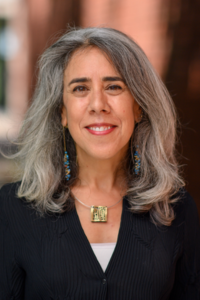
Deborah J. Yashar is Director of the Princeton Institute for International and Regional Studies (PIIRS) and the Donald E. Stokes Professor of Public and International Affairs at Princeton University. Her scholarship addresses democracy and authoritarianism; violence; states in the developing world; citizenship rights; social movements; ethnic politics; and immigration politics. Yashar is author of three books, including Homicidal Ecologies: Illicit Economies and Complicit States in Latin America (Cambridge University Press, 2018; best book award from APSA’s Comparative Democratization section); Contesting Citizenship in Latin America: The Rise of Indigenous Movements and the Postliberal Challenge (Cambridge University Press, 2005, Best Book Award by the New England Council on Latin American Studies); Demanding Democracy: Reform and Reaction in Costa Rica and Guatemala (Stanford University Press, 1997). She is also co-editor of four volumes, including The Inclusionary Turn in Latin American Democracies (Cambridge University Press, 2021, coedited with Diana Kapizewski and Steve Levitsky); States in the Developing World (Cambridge University Press, 2017, coedited with Miguel A. Centeno and Atul Kohli); Parties Movements and Democracy in the Developing World (Cambridge University Press, 2016, coedited with Nancy Bermeo); and Routledge Handbook of Latin American Politics (Routledge, 2012, coedited with Peter Kingstone).
STATEMENT OF VIEWS
I am honored by the invitation to run for APSA Council. These are challenging times when core academic freedoms and democratic norms are being challenged. As a council member, I would focus on three things. First, I would spotlight and defend our commitment to academic freedom, which is core to our mission, higher education, and society at large. APSA has an opportunity to work with other professional associations to express and defend this right for our faculty, students, and staff. Second, I would emphasize APSA’s global reach and institutional responsibility to safeguard inclusive and dynamic intellectual opportunities for our entire membership, including our international colleagues as well as our most vulnerable members. This is a time to emphasize inclusion within and across borders. Third, APSA must continue to support intellectual pluralism (with a diversity of theoretical and methodological perspectives) as a means to advance cutting-edge scholarship and teaching.