
2024 Council Nominations
The call for council nominations was circulated among the membership, and outreach specifically to APSA committees and organized sections was conducted. The nominating committee made its decisions after careful deliberation and consideration for the diversity of the field and the varied interests of political scientists. APSA also accepts nominees by petition, the deadline for submitting nominees by petition was June 10, 2024 and no nominations were received. The candidates were put to a vote by the full membership via electronic ballot. Balloting opened on August 9 and concluded on September 8.
Additional information about APSA elections is available here.
APSA 2024 Council Nominees
| President | |
|---|---|
| Susan Stokes, University of Chicago | 2024−2027 |
| Vice President | |
|---|---|
| Juliet Hooker, Brown University | 2024−2025 |
| Vincent Hutchings, University of Michigan | 2024−2025 |
| Caroline Tolbert, University of Iowa | 2024−2025 |
| Council | |
|---|---|
| Lonna Atkeson, Florida State University | 2024−2027 |
| Nadia Brown, Georgetown University | 2024−2027 |
| Stacie Goddard, Wellesley | 2024−2027 |
| Anna Grzymala-Busse, Stanford University | 2024−2027 |
| Julie Mueller, Southern Maine Community College | 2024−2027 |
| Melissa Rogers, Claremont Graduate University | 2024−2027 |
| Sara Rushing, Montana State University | 2024−2027 |
| Cherie Strachan, University of Akron | 2024−2027 |
Meet the Council
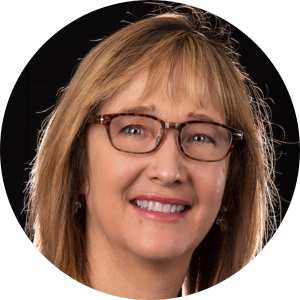
Susan Stokes
Bio: Susan Stokes is the Tiffany and Margaret Blake Distinguished Service Professor of Political Science and the faculty director of the Chicago Center on Democracy. She is a founding member of Bright Line Watch. Her research focuses on democracy in developing countries, distributive politics, and comparative political behavior. She has published books and articles in these areas, including Mandates and Democracy (2001), Voters, Brokers, and Clientelism (co-authored, 2013), and the forthcoming book, Trash-Talking Democracy, about democratic erosion (expected 2025). In addition to the University of Chicago, Stokes taught at the University of Washington (1988-1990) and at Yale (2005-2018). At Yale she served as chair of the Political Science Department and of the Council on Latin American and Iberian Studies. She is a fellow of the National Academy of Sciences and a member of the American Academy of Arts and Sciences.
Statement of views: Perhaps never in our history do citizens in the U.S. and around the world look to political scientists for answers to pressing problems. APSA will continue to be a place that helps us do this work, and to do it better. We need to constantly identify and support young scholars and those from communities that face obstacles in their professional lives. As a founding member of Bright Line Watch and faculty director of the Chicago Center on Democracy, I have dedicated the last several years to leading research teams focused on democracy and teaching collaboratively on this topic. With many years of joint research with international scholars, in particular in Latin America, I have a strong belief in the need of our profession, and our organization, to tap the talents and imagination of people across the globe.
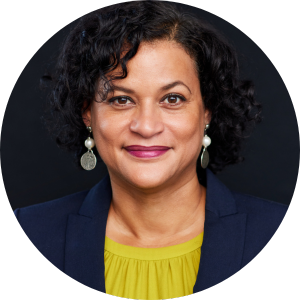
Juliet Hooker
Bio: Juliet Hooker is the Royce Family Professor of Teaching Excellence in Political Science at Brown University, where she teaches courses on democratic theory, racial justice, contemporary political theory, Black political thought, and Latin American political thought. Before coming to Brown, she was a faculty member at the University of Texas at Austin. She is the author of multiple award-winning books, including: Race and the Politics of Solidarity (Oxford, 2009), Theorizing Race in the Americas: Douglass, Sarmiento, Du Bois, and Vasconcelos (Oxford, 2017), Black Grief/White Grievance: The Politics of Loss (Princeton, 2023) and editor of Black and Indigenous Resistance in the Americas: From Multiculturalism to Racist Backlash (Lexington Books, 2020). Theorizing Race in the Americas was awarded the American Political Science Association’s 2018 Ralph Bunche Book Award for the best work in ethnic and cultural pluralism and the 2018 Best Book Award of the Race, Ethnicity, and Politics Section. Prof. Hooker previously served as co-Chair of the APSA Presidential Task Force on Racial and Social Class Inequalities in the Americas (2014-2015), and as a member of the APSA Governing Council (2016-2019): Chair, Conferences and Meetings Committee (2018-2019), Chair, Ad Hoc Committee on Awards (2018-2019), Executive Committee (2018-2019).
Statement of views: This is a difficult time for APSA, both because of the continued attacks on higher education and because of the alienation of some members after the disagreements over holding the annual meeting in 2023 in Los Angeles despite the strike by hospitality workers. I feel strongly that the way forward for APSA to repair its relationship with members is by having greater transparency and accountability about decision-making by the association’s leadership. We’re also in a moment when higher education is facing sustained efforts to curtail or eliminate the principles of academic freedom and faculty governance, not to mention long-term trends toward more contingent and precarious faculty employment, as donors and elected officials attempt to dictate what happens on university campuses. In this context it is crucial to have a strong APSA that can help make the case for the value and importance of political science and higher education more generally.
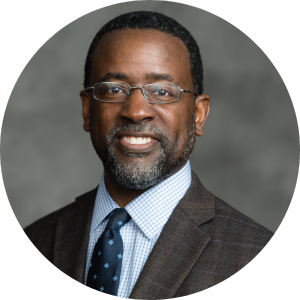
Vincent Hutchings
Bio: Vincent Hutchings is the Hanes Walton Jr. Collegiate Professor of Political Science at the University of Michigan and a Research Professor at the Institute for Social Research. In 2020, he was also appointed as a University Diversity and Social Transformation Professor. He received his Ph.D. in 1997 from the University of California, Los Angeles. Professor Hutchings conducts research and teaches courses in Black politics, American public opinion and voting behavior, and racial attitudes. In 2003, he published a book entitled Public Opinion and Democratic Accountability, from Princeton University Press. His research has primarily focused on the ways in which political campaigns and the media frame information about racial issues in order to activate and make politically relevant the voters’ sympathies and/or antipathies for particular racial groups. Professor Hutchings has received multiple grants from the National Science Foundation. He was one of the Principal Investigators of the American National Election Study from 2010-2017. In 2012, Professor Hutchings was elected as a Fellow to the American Academy of Arts and Sciences (AAAS). In 2022, Professor Hutchings was elected to the National Academy of Sciences (NAS).
Statement of views: I have been a member of the APSA for over thirty years. In that time, I have witnessed a lot of change in the profession and political world more broadly. If elected Vice-President, I would work on the issues that have motivated me throughout my career. These issues include understanding the various ways that racial considerations are implicated in our political system, seeking to diversify the profession on multiple dimensions (e.g., race, ethnicity, gender, and class), and uplifting and protecting graduate students as they transition into the profession. Our country is experiencing some of the most politically divisive and challenging times in my lifetime, but I still believe that expertise – and specifically political science – can play a productive role in helping us to understand and hopefully mitigate these conflicts. The American Political Science Association can play an indispensable role in this process by marshalling our collective expertise to address, and ultimately resolve, the most pressing political issues of the day. I look forward to strengthening the organization, extending its influence on topical political matters, and broadening the base of members who feel included.

Caroline Tolbert
Bio: Caroline Tolbert, Ph.D. is a Distinguished University Professor of Political Science at the University of Iowa, where she regularly teaches graduate seminars in research methods and undergrad courses in public policy, social media and politics, and voting and elections. She was named a 2021 Andrew Carnegie Fellow for her research on voting and state election reforms. She is coauthor of Accessible Elections: How State Governments can Help Americans Vote (2020) and Choosing the Future: Technology and Opportunity in Communities (2021), both with Oxford University Press. The latter book won the 2022 Goldsmith Prize for the best book from the Shorenstein Center, Harvard’s Kennedy School of Government. Accessible Elections examines absentee/mail voting, early voting, AVR and same-day registration. Tolbert and Michael Ritter published a 2024 Election Law Journal article creating an index of local government performance in managing elections, County Election Administration (CEA) (previous metrics were state level). She has published widely on political participation, voter turnout, campaigns and elections, and public opinion. She is also coauthor of Digital Cities, Digital Citizenship, and Virtual Inequality: Beyond the Digital Divide. Funded by the National Science Foundation and non-profits, her work seeks to strengthen American governance and increase participation in politics. She is the recipient of a 2024 Career Achievement Award from the State Politics section of APSA.
Statement of views: As Vice President, my goal is more opportunities for meaningful, inclusive participation for APSA members. I aim to create bridges and improve communication between practitioners and researchers, among members working across subfields and using different methodological approaches, and between students and faculty. I am especially interested in elevating the visibility of political science research that seeks to improve governance, public policy, and foreign policy. In terms of teaching, I seek a broad education for our students, emphasizing mentoring, creative use of technology, research opportunities and internships, community-engaged research, methodological training, and professionalization. I am committed to promoting diversity in the Association via awards, mentoring, conferences, and the publication process of APSA’s journals. In sum, I seek ways that we can reward research that engages and addresses real-world policy problems and works with community stakeholders. I believe these conversations will help scholars tackle the many political and policy problems we face in the U.S. and globally.
Council

Lonna Atkeson
Bio: Lonna Rae Atkeson is the LeRoy Collins Eminent Scholar in Civic Education and Political Science at Florida State University where she also directs the LeRoy Collins Institute, a public policy think tank. Currently she sits on the MIT Data and Election Science Board, the American National Election Studies Board, and is an Associate Editor for Political Analysis. Her research focuses on election science, election administration, survey methodology, public policy, voting rights, public opinion, and political behavior. She has authored or edited 4 books, over 50 referred articles and book chapters, numerous policy reports, several amicus curiae briefs, and has been an expert witness in voting rights cases. She has received the Jack Taylor Best in Government Award from Common Cause New Mexico, the Distinguished Service Award from Verified Voting New Mexico and United Voters of New Mexico, and the Excellence in Mentoring Award from the Society for Political Methodology. She has consulted for the Department of Defense, the US Election Assistance Commission, and various private companies. Her research has been supported by the NSF, Pew, the Golisano Foundation, the Thornburg Foundation, and various state agencies. She Received her BA from the University of California, Riverside and her PhD from the University of Colorado, Boulder.
Statement of views: I am honored to be nominated to the American Political Science Association council. The American Political Science Association represents a large cadre of scholars across multiple subfields, regions of the world, and who work both inside and outside of the academy. Importantly political science engages in research that is relevant, timely, and helpful to policy makers and government officials. My own research efforts have often been applied, which has made me realize how much political science as a discipline has to offer the world. Therefore, it’s my goal to encourage and promote research projects, contracts, grants, dialogue, symposia, conferences, testimony, and other interactions between academic scholars and policy makers, legislators, NGOs, and other interested parties. We have something important and valuable to contribute to our communities, societies, nations, and world; we need to embrace it.

Nadia Brown
Bio: Nadia E. Brown (Ph.D., Rutgers University) is a Professor of Government, director of the Women’s and Gender Studies Program, and affiliate in the Black Studies department at Georgetown University. Dr. Brown is a founding board member of Women Also Know Stuff. She is also one of the American politics editors at Good Authority. Professor Brown is the immediate past lead editor of Politics, Groups, and Identities a journal of the Western Political Science Association. Professor Brown and colleagues Elizabeth Sharrow, Stella Rouse, and Rebecca Gill are the recipients of a $1 million National Science Foundation’s ADVANCE program for their project “#MeTooPoliSci Leveraging A Professional Association to Address Sexual Harassment in Political Science” which seeks to stop sexual harassment in the discipline. She is the author of the award-winning Sisters in the Statehouse: Black Women and Legislative Decision Making (Oxford University Press, 2014) and Sister Style: The Politics of Appearance of Black Women Political Elites (with Danielle Lemi, Oxford University Press, 2021) and co-editor of 9 books including an American politics textbook and edited volumes on racial, ethnic politics and feminist studies.
Statement of views: I am deeply grateful for the opportunity to be considered for the APSA Council. If it were not for APSA’s commitment to the Ralph Bunche Summer Institute (RBSI) I would not be a member of the profession today. It is because of my experiences with RBSI that I am committed to helping APSA’s ongoing efforts to meaningfully and substantively increase the ethno-racial, gender, class, and sexual orientation diversity in the discipline of political science. My teaching, service, and research reflect my commitment to these goals. Additionally, I am a strong believer in intersectional mentorship and am an advocate of members of underprivileged groups as evidenced by my service-informed teaching and scholarship. While universities and colleges grapple with the future of Diversity, Equity, and Inclusion initiatives I welcome the opportunity to assist APSA in developing resources for political science educators to remain actively engaged in this space.
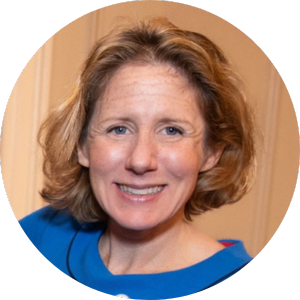
Stacie Goddard
Bio: Professor Stacie Goddard is the Betty Freyhof Johnson ‘44 Professor of Political Science and Associate Provost for Wellesley in the World at Wellesley College. Her research and teaching focuses on questions of great power competition and international order. Her latest book, When Right Makes Might: Rising Powers and World Order was published by Cornell University Press in 2018. Other writing has appeared in International Organization, International Security, and Security Studies, as well as Foreign Affairs, the New York Times and the Washington Post. She is an incoming member of the editorial board of International Organization, a series editor for Columbia University Press, and served as an editor at the “Monkey Cage” at the Washington Post.
Statement of views: It is an honor to be nominated for APSA’s governing council. I have been fortunate to have served in a few positions in APSA, including as chair of the Nominating Committee, and as President of the International History and Politics Section, so I have some experience with the important work APSA does for the discipline. I hope to contribute on four pressing challenges. First, to help the profession analyze and respond to increasing challenges to academic freedom. Second, to help ensure that, in the midst of these challenges, we retain our commitment to diversity and inclusion in our field, reaffirm our interest in engaging with, and represent diverse perspectives. Third, to make sure APSA continues to produce careful, evidence-based, public-facing work, accessible to readers outside of academia, that provides necessary insight into even the most contested issues. And finally, within the discipline, to help support our membership through obstacles, especially increasing vulnerability on the job market and the need to support those seeking careers outside of academia.
.

Anna Grzymala-Busse
Bio: Anna Grzymala-Busse is the Michelle and Kevin Douglas Professor in the Department of Political Science, the director of the Europe Center, and Senior Fellow at the Freeman Spogli Institute at Stanford. She previously worked at the University of Michigan, Ann Arbor, and Yale University. Her research focuses on religion and politics, authoritarian political parties and their successors, and the historical development of the state. She is the author of four books: Redeeming the Communist Past: The Regeneration of Communist Successor Parties; Rebuilding Leviathan: Party Competition and State Development in Post-Communist Europe; Nations Under God: How Churches Use Moral Authority to Influence Politics; and Sacred Foundations: The religious and medieval origins of the European State. She is the recipient of the Carnegie and Guggenheim Fellowships. She has served as APSA Program Co-Chair (2018), Chair of the Comparative Democratization Section (2015-2017), and Chair of European Politics Section (2008-9), and on multiple prize committees for the Association.
Statement of views: The strength of APSA lies in its diversity of analytical approaches, viewpoints, and experiences, and its commitment to research integrity, transparency, and collaboration. I believe we can make APSA even stronger in three ways: first, we need to articulate and emphasize our commitment to academic freedom, transparency, intellectual rigor, and ethical standards. Second, we need to pay greater attention to the needs of vulnerable scholars: contingent faculty, graduate students, untenured faculty, and scholars working in regimes with questionable commitments to individual and academic rights. Third, we need to better serve our members: by making decisions more transparently, communicating them more effectively, and ensuring that our actions align with our core values.
.

Julie Mueller
Bio: Julie Mueller is Professor of Political Science at Southern Maine Community College. She teaches introductory courses in American Government, Comparative Politics, International Relations and Political Theory, as well as courses on security and gender. She holds a BA in International Relations from Bucknell University and received both her MA and Ph.D. in Political Science, from the University of Delaware. Her research interests include the International Monetary Fund and economic development, and her work has been published in Global Society, Middle East Critique and in the edited volume Pedagogical Journeys through World Politics: Adventures in Teaching. She has been an APSA member since 1998, has served on the APSA Status of Community College in the Profession Committee, including serving as co-chair for one year, and is an active member of the Political Science Education section. Julie is also a frequent contributor to APSA Educate, and currently serves on the Editorial Advisory Board for the Journal of Political Science Education, APSA’s primary pedagogy journal. She has also participated in several online APSA symposia on teaching and learning.
Statement of views: It is an honor to be nominated to serve on the APSA Council and to represent community college faculty and political science education more broadly. As a long-time member, I have seen the value that APSA provides for political scientists at various points in their careers, and I value the opportunities for collaboration it provides with my peers across the country. I am passionate about supporting our colleagues teaching at two-year institutions and as contingent faculty, and I hope to continue to encourage them to become active members, to provide them with useful resources, and to find ways to advocate for them within APSA. Continuing to expand the accessibility of meetings and programs is one way we can do this. For example, as a mother with a limited budget, I benefitted greatly from the shift made toward more online programming since COVID. Resources for faculty with limited time and institutional support should continue to be a priority. During my tenure on the status committee, I pushed for APSA to prioritize improving communication and collaboration between two- and four-year institutions and creating avenues within the organization for this to happen.
.
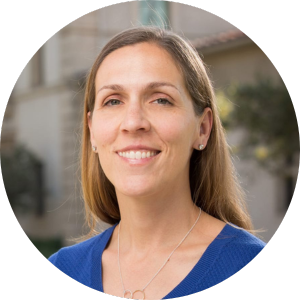
Melissa Rogers
Bio: Melissa Rogers is an Associate Professor of Political Science at Claremont Graduate University. She has served as Associate Dean for the social sciences at CGU, and Chair for the Division of Politics and Economics, and the Department of International Studies at CGU. Rogers is currently the Chair of the Diversity Committee for the Political Methodology Society. Her research examines the political geography of inequality from a comparative politics and American politics perspective. She has written extensively on how spatial inequalities matter for government policymaking, including in her recent book Geography, Capacity, and Inequality with Pablo Beramendi (Cambridge University Press, 2022), and articles in outlets such as Journal of Politics, Regional Studies, and Political Research Quarterly. Rogers has also published her research on measurement validity with geographic data in Political Analysis. Her recent research has also focused on voting rights access for Native Americans and voter equity at the local level in the United States. She has published this research in journals such as Studies in American Political Development, Politics, Groups, and Identities, and Social Science Quarterly. She is a prolific advisor of talented graduate students who have earned prestigious roles in teaching colleges, government, and the private sector. Rogers earned her Ph.D. from the University of California, San Diego and her BA from Brown University.
Statement of views: It is an honor to be nominated for the APSA Council. If elected, I will bring to the council a focus on programming to meet the needs of all APSA members. APSA represents scholars from around the globe and across the full range of institutions—from community colleges to Ph.D. granting institutions, and teaching-focused to research-focused institutions. I consider it very important for APSA to keep in mind the inequalities in terms of research and travel funding, research time, and access to resources across faculty and students in the discipline. I will bring to the council a perspective from a small, graduate-focused university facing extreme challenges to our funding model. I will push APSA to think deeply about the ongoing fiscal crisis in higher education, especially for under-resourced universities, and how APSA might support scholars in turbulent times.
.

Sara Rushing
Bio: Sara Rushing is a Professor of Political Science at Montana State University, in Bozeman. Rushing is a political theorist, specializing in feminist and democratic theory, as well as the intersection of politics and ethics. She is the author of The Virtues of Vulnerability: Humility, Autonomy, and Citizen-Subjectivity (Oxford, 2020), as well as articles on the politics of embodiment and the cultivation of agency, particularly within neoliberal institutions including the university and mainstream medicine. She served as the Co-Director of Montana State University’s $3.5 million NSF-ADVANCE Institutional Transformation grant from 2012 – 2017, which was a research-driven, university-wide set of policy and practical interventions aimed at broadening participation of women in STEM and the social and behavioral sciences. In her capacity as Co-Director, she worked to expand that grant’s focus beyond STEM/SBS, and beyond gender, to develop a more just and equitable campus climate for all. From 2019 – 2022 she served as Co-President of the Association for Political Theory and has been a member of the editorial team for the journal Contemporary Political Theory since 2021. She also serves as the Chair of her local City of Bozeman Board of Ethics.
Statement of views: I am honored to be nominated to run for the APSA Council. Having started my term as Co-President of the Association for Political Theory in 2019 and navigating my first year in that role during COVID, I became keenly aware of how important our disciplinary community is. This is particularly true for scholars in very small academic departments, those from rural areas with few universities and limited proximate colleagues (like in Montana), and those lacking built-in mentoring and professional development opportunities closer to home. In addition to the amazing in-person conferences we attend, more regular opportunities to engage with each other online throughout the year are essential. Such events can address needs that the annual conferences cannot meet: small group mentoring around particular professional challenges; presentation of ideas or works in development that are not ready for prime time (or even Sunday at 8:00 a.m.); pedagogical conversations or manuscript workshopping; the chance for mid-career scholars to play leadership roles in helping advance junior faculty; etc. Opportunities to gather virtually for such purposes – in addition to the obvious scholarly and climate benefits – enhances a sense of disciplinary connection and belonging, which can be one major way to increase the diversity of voices and issues highlighted within our field. Moreover, at a time when the humanities and social sciences are under particular attack within the university, our disciplinary connection and collective voice is crucial for helping make the case that political theory and political science matter for the study of, and democratically sustainable practice of, politics.
.

Cherie Strachan
Bio: J. Cherie Strachan is Professor of Political Science and Director of the Ray C. Bliss Institute of Applied Politics at the University of Akron. Strachan previously held faculty and administrative positions at the State University of New York at Albany, Central Michigan University, and Virginia Commonwealth University. Her scholarly work, with recent publications in Groups, Politics, and Identity, PS, Politics & Political Science, and Political Research Quarterly, focuses on political participation, voluntary civic and political organizations, partisan polarization, and political communication. Recent work examines the way the #MeToo Movement has affected women’s political ambition, the effects of partisan polarization and rudeness on young people’s anticipated political participation, and the role of civility and deliberation in sustaining a democratic society. Meanwhile, her scholarship of teaching and learning, often published in pedagogy-focused edited collections, explores student-led deliberative discussion sessions and political socialization within campus student organizations. Her publications also include the co-authored Why Don’t Women Rule the World, Understanding Women’s Civic and Political Choices, as well as the co-edited APSA resource Navigating Graduate School and Beyond and a forthcoming co-edited volume, The Palgrave Handbook of Fashion and Politics.
Statement of views: I am honored to be nominated to serve on APSA’s executive council. Throughout the course of my career, while working at regional publics serving many first-generation and at-risk students, I have purposefully pursued research, teaching, service, and administrative positions that align with two priorities. The first of these is my commitment to diversity and inclusion. The second of these is my commitment to civic engagement pedagogy, which focuses on teaching students not only the knowledge, but also the skills and dispositions required for public-spirited participation in an inclusive democracy. I appreciate that APSA has also been willing to evolve to prioritize these two agendas, to meet my own and other members’ professional needs. For example, as my applied research and administrative positions increased my involvement in higher education’s civic engagement movement, I found my way to the Political Science Education Section to network with those who established what was at the time a fairly new section journal, the Journal of Political Science Education. As pedagogy and civic engagement initiatives became more integral to our discipline’s work, APSA expanded professional development opportunities by establishing the Teaching & Learning conference, publishing the Teaching Civic Engagement series of edited collections, establishing the APSA Educate website, and supporting the launch of the new Civic Engagement section. I believe that expanding these commitments, along with commitments to diversity and inclusion, is essential in order for our discipline to successfully address the threats of democratic backsliding and rising authoritarianism at home and abroad. Hence, I see my current role as helping to build on these endeavors, not only to highlight this important work, but to enhance opportunities for others. We must ensure our discipline’s efforts on these fronts are dynamic, responding not only to a rapidly changing political environment, but also to the needs of our increasingly diverse student bodies and communities. I appreciate the opportunity to continue to support and to grow these important initiatives as a member of council.