
2026-2027 APSA Fall Diversity Fellowship Program
The following students were named as 2026-2027 APSA Diversity Fellowship Program recipients during the fall 2025 application cycle. These fellows are currently applying to PhD programs in political science.
- Mariam Al-khafaji, Virginia Commonwealth University
- Elysia Couvertier, Texas A&M University
- Emily Danczyk, The Pennsylvania State University
- Shane Edghill, Texas Tech University
- Luis Guaman, Princeton University
- Kevin Hunter, University of Tennessee Knoxville
- Angel Llanos, Emory University
- Myles Ndiritu, Morehouse College
- Olivia Porter, Stanford University
- Grae Roeder, University of Minnesota Twin Cities
- Miles Salley, Old Dominion University
- Josearmando Torres, University of Pennsylvania
- Lily Ulrich, University of California, Santa Barbara
- Kepra Young, University of Florida
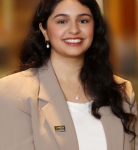
Mariam Al-khafaji graduated with her bachelor’s degree in political science in 2024 at Virginia Commonwealth University. She is primarily interested in comparative politics in the Middle East, specifically electoral outcomes and political participation. She is also interested in regime shifts within the Middle East region and how political leadership affects citizens. Mariam published a quantitative-based research paper using the Arab Barometer in her undergraduate department regarding the effects of low socioeconomic status on voter participation in three nation-states: Tunisia, Iraq, and Lebanon. She anticipates completing her master’s in public administration from VCU in May 2026. During her graduate studies, Mariam became an expert in both quantitative and qualitative research methods through her research fellowship site and continued to work on a paper incorporating survey methodology to help Arab American Muslim college students access proper mental health care.

Elysia Couvertier is an undergraduate political science student at Texas A&M University whose research examines Puerto Rican political identity, diaspora politics, and the political status of U.S. territories. She authored “A Nation’s Choice,” an IRB-approved survey project exploring how birthplace and migration shape Puerto Ricans’ preferences regarding self-determination and political status. As a Japanese-Puerto Rican woman, she is committed to exploring the complexities of racial and ethnic structure in relation to political behavior, with a particular interest in intersectionality within multiracial identities. She is also a coauthor on a paper examining the relationship between civic engagement and health for Native Hawaiians, using sovereignty as a mechanism for understanding Hawaiian well being. She has since presented her work at various conferences and competitions, including WPSA. Elysia plans to pursue a PhD in political science, with the long-term goal of conducting publicly engaged research that elevates underrepresented communities and informs equitable policy.
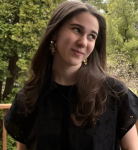
Emily Danczyk is in her fourth year at The Pennsylvania State University, majoring in political science and media studies. Emily attributes her love of political science to taking road trips with her family, visiting 49 of the 50 U.S. states as of July 2024. While at Penn State, Emily tailored her coursework to focus on the relationship between domestic policy and the media, more specifically, how modern and traditional media impact regulation, legislative implementation, constituents’ opinions on governmental affairs, and youth civic engagement. She has worked at the Center for Global Studies at Penn State since her first year, where her primary project was collaborating on a collegiate-level textbook about modern global political satire. Upon finishing her undergraduate studies, Emily plans to pursue a PhD to further academic understanding of the impacts of satire, media, and intersectionality on American politics.
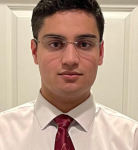
Shane Edghill is a senior at Texas Tech University majoring in political science with a minor in history. His interests in political science stem from American politics, specifically political behavior, public opinion and data analysis. In addition, he is a Fourth Degree member of his Knights of Columbus council, the Director of Inter-Organizational Relations in his Turning Point USA chapter, and he is also a member of Pi Sigma Alpha. After completing his undergraduate studies, Shane plans to pursue a PhD to continue researching and conducting studies regarding American politics in the field of political science.

Luis Xavier Guaman is a first-generation senior at Princeton University majoring in politics. He is interested in examining the political implications of the Latine experience by disaggregating across behavioral and institutional contexts. His thesis investigates how racialized enforcement contexts shape support for state violence, using immigration and local law enforcement as equivalent experimental conditions. As a member of the Lab on Politics, Race, and Experimental Methods, Luis contributed to pilot studies for the Princeton-Jackson State National Election Study and conducted conjoint experiments on policing perceptions through the University of Michigan Summer Research Opportunity Program. Over the past summer, he served as research coordinator for a Princeton-CSU Long Beach pilot study, collecting immigration courtroom observations nationwide. He has presented his research at the 2025 Southern, Western, and American Political Science Association conferences. Luis aspires to become a tenure-track professor, pursuing mixed-methods research while mentoring the next generation of scholars.

Kevin Hunter is a senior at the University of Tennessee, majoring in political science with a minor in social justice. His research interests focus on Black political behavior; particularly how Black voters shape their ideological and partisan identities and how these identities interact across different social and political contexts. He explored these questions as a 2025 Ralph Bunche Summer Institute scholar and has presented his research at the 2025 American Political Science Association annual meeting and the 2025 Eldersveld Emerging Scholars Conference at the University of Michigan. He is currently working on his senior thesis, which investigates the paradox of Black conservative Democratic voters. Kevin’s future goals include pursuing a PhD with a focus on Black political behavior, building a long-lasting and impactful career as a researcher, and mentoring other scholars to explore and pursue careers in political science.
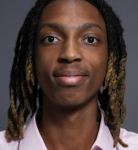
Myles Ndiritu is a senior at Morehouse College majoring in international studies, with a minor in data science. He is especially interested in applying quantitative methods to study how great powers influence development outcomes in African states. Myles has co-authored two research projects—one analyzing Chinese investment in Sub-Saharan Africa and another examining China’s position in the global battery supply chain—both currently in the process of publication. Myles has presented his work at major political science conferences such as APSA, ISA, and PeaceScience. Dedicated to building research capacity on campus, Myles serves as a teaching assistant for a political science research methods course and is a senior fellow with the Morehouse Community Data Fellowship, where he mentors students and faculty in data analysis. Myles will further develop his research at a PhD program, with hopes to advance the understanding of development and governance in African states.

Olivia Gawehnidi Porter is an enrolled citizen of the Seneca Nation and member of the Turtle Clan from the Nation’s Allegany Territory. She is a current graduate student at Stanford University, pursuing an MA in philosophy with a focus on ethics and political philosophy. She earned her BA in political philosophy from Syracuse University, where she graduated magna cum laude with honors. She wrote her honors thesis on the influence of European political theory on the persistence of settler colonialism in the United States and Canada. Olivia plans to continue this research in a PhD program by studying the relations between Haudenosaunee (Iroquois) political thought and Western political philosophy. She is specifically interested in how Haudenosaunee treaties and agreements with settler governments (e.g., the United States and Canada) contributes to or resists subjugation by these states.
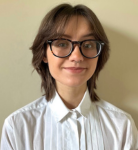
Grae Roeder specializes in political theory and is especially concerned with aesthetic representation and narrative in political discourse as well as the relationship between subjectivity and structure. They are graduating summa cum laude in December of 2025 from the University of Minnesota, Twin Cities, where they had majors in political science, philosophy, and global studies. At UMN, they were exceptionally active in their academic community, such as in their service as president of Epistemai (UMN’s undergraduate journal of philosophy), as well as in their leading and organizing roles in various other clubs and reading groups. With attention to the increasing influence of the far-right, their thesis inquired into the possibility of a feminist and queer political project that turns to coalition and conversation, in effort to avoid collapsing the political into liberal individualism and epistemological position. Grae is currently applying to PhD programs to continue doing work that addresses the potential of political change, resistance, and relationships within (and through) oppressive conditions.
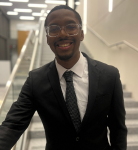
Miles Salley is a graduating senior at Old Dominion University majoring in political science with a minor in sociology. While at Old Dominion University, he has served as a research assistant under the supervision of Dr. Athena King, examining the nexus of environmental justice and intersectionality. In addition, he has also had the opportunity to serve as an undergraduate teaching assistant for the Introduction to American Politics class, assisting on foundational concepts and supporting students’ understanding of key course material. In his most recent work, he examines the Black Church, and whether declining attendance correlates with reduced political engagement among Black Americans. In his doctoral studies, he aims to focus on the political behavior of Black Americans, and how Black Americans leverage institutions, their identity, and representation to shape political participation and public policy within the United States.
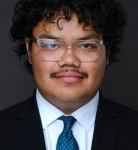
Angel Sosa Llanos will graduate from Emory University in Spring 2026 with a BA in political science. His research interests are race and ethnic politics, Latino political engagement, voting behavior, and the politics of immigration. He developed and pursued these research interests as a 2025 Ralph Bunche Summer Institute scholar, 2024 Emory Summer Undergraduate Research Fellow, 2024 Emory Center for Law and Social Sciences fellow, and through internships with the Emory Votes Initiative, the Latinx Studies Initiative, the Southern Poverty Law Center, and the Latino Community Fund of Georgia. He has presented his research at the APSA Annual Meeting, the Michigan Emerging Scholars Conference, the MPSA Annual Meeting, and the Emory Summer Undergraduate Research Symposium. His senior thesis investigates how race and education interact to shape misreporting of voter turnout in large national surveys. After graduation, he plans to pursue a PhD in political science to become a professor.
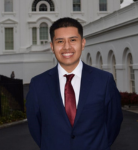
Josearmando Torres is a recent graduate of the University of Pennsylvania with a B.A. in political science with honors and a minor in survey research and data analytics. His senior thesis, “Competition, Color-Blindness, or Coalition?” examines how perceived competition with African Americans and race-neutral attitudes shape Latino support for Black-led movements and policies. As a 2024 Ralph Bunche Summer Institute Scholar, he studied how expressing an American identity relates to anti-immigration attitudes among Latinos. He is a coauthor of an article on sampling bias and Black voters in online opt-in polls in the Journal of Race, Ethnicity, and Politics. He is currently a Predoctoral Researcher at the Stanford Institute for Excellence in Survey Research and plans to pursue a Ph.D. in political science to study American politics, race and ethnic politics, political behavior, and survey research.
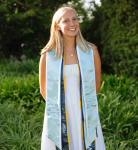
Lily Ulrich is a graduate from the University of California, Santa Barbara with a Bachelor of Arts in political science and minors in feminist studies and history. Lily is pursuing a PhD in American politics to study how gender identity shapes political identity formation and civic engagement. She has contributed to research projects examining the aftermath of the Dobbs decision and rebel group ideologies in extra-state wars. She continues to contribute to the latter project, “Why the Past Matters for the Future: Introducing the Historical Indices of Rebel Organizations (HIRO) Dataset,” which is slated for completion by the end of this year and submission to the Journal of Conflict Resolution, where she will be listed as a co-author. Lily also has legislative experience interning for Congressman Salud Carbajal and Assemblymember Gregg Hart. Her nonprofit and grassroots engagement experience includes working as the Volunteer Engagement Intern with the American Cancer Society Cancer Action Network, serving as the Political News Correspondent for UCSB’s student-run radio station, and leading voter registration drives as a volunteer with the Gauchos Voter Coalition.

Kepra Young has recently graduated from the University of Florida with a master’s degree in political science and a graduate certificate in political campaigning. She also holds a bachelor’s degree in political science from Spelman College. Her research interest includes using a lens of intersectionality to investigate whether Black women’s racial and gender identities impact voters’ evaluations, resulting in disadvantages to their candidacies. She is specifically interested in using survey experiments to test whether voters use prejudiced appearance heuristics when evaluating Black women as political candidates. Kepra intends to enter a Ph.D. program where she can develop research that supports existing gender and race theories with empirical evidence. She hopes that her research can ultimately be used to aid Black women in running successful campaigns that increase racial and gender equity among elected officials.