
February 2026
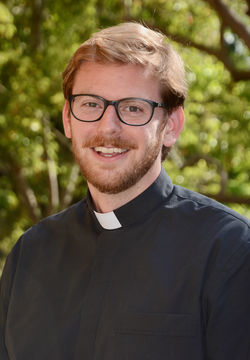
Michael Thomas
PhD Candidate, Stanford University
Member since 2023
How did you learn about APSA? When did you become a member of APSA, and what prompted you to join?
I learned about APSA through faculty and older graduate students in my department. While still a first-year PhD student in political theory, fellow students shared how important the annual conference was for meeting scholars and encountering field-shaping research. From faculty members, I heard stories of past APSA conferences in which senior scholars discussed and debated the future of the discipline of political science. Both dimensions were exciting to me, which led to my joining APSA in 2023.
How have APSA membership and services been valuable to you as a student?
APSA membership has been enormously beneficial to me, chiefly through participation in the annual conference. At the conference, I have had the opportunity to meet and have lunch or coffee with scholars whose work I admire. I am very grateful for these opportunities of informal mentoring, encouragement, and guidance that I have received by setting up meetings with faculty at the conference. Just this past year, a few friends and I were able to organize a panel and invite incredible scholars as the respondents and chair – the experience was very rich. At the conference, I have also received constructive and helpful feedback on projects that are still in progress. It has also been wonderful to meet fellow graduate students from across the country, learn about their work, and enjoy meals together. Despite its size, the conference has a kind of “reunion” feel to it – people catch up, make introductions, and congratulate each other on their work. In short, I find the experience motivating and encouraging – after months or even years of solitary work, it is a beautiful thing to share one’s scholarship with a community and to receive their feedback.
Can you tell us about your professional background and your research?
Before starting my PhD in political theory at Stanford, I taught high school for three years in Santiago, Chile. While living in Chile, I was plunged into broader Latin American politics by living through the 2019 Chilean social uprising (the “estallido social”) that provoked a constitutional crisis and eventually two failed constitutional re-writes. It was an extraordinary political moment of mass popular mobilization, plebiscite voting, and institutional crises. As people in the street marched and made demands in the name of “the people” or “el pueblo,” I became intensely interested in questions of democratic theory: what did this word “people” or “pueblo” mean and who was included? Who had legitimate political authority, the people in the street or their elected representatives who they refused to acknowledge?
I am also a Roman Catholic priest, and I belong to a religious order called the Congregation of Holy Cross. In addition to parish work, the mission of Holy Cross includes education, serving in schools and universities in over a dozen countries. As a priest in Chile, I had the experiences of celebrating Mass, presiding at funerals, attending to the sick and dying, and celebrating baptisms. One particularly powerful experience was serving as a “Covid priest” – one of the designated priests in the archdiocese to visit and give sacraments to patients who were in isolation in clinics throughout the city. In addition to these powerful experiences of Chilean religious life, I also began to learn how important the Church had been in Chilean politics throughout the twentieth century. Between the intense political experiences of the 2019 uprising and these experiences as a priest in Chile, my love for and interest in the political and religious life of Latin America grew. These experiences have profoundly shaped my broader research agenda and my current dissertation project.
In my research, I study the history of democratic theory and its relationship to religion: how did theorists use religious arguments to justify democratic politics? What difference did these religious elements make in shaping democratic thought and practice? While I am also interested in the development of democratic thought in Europe, my dissertation research focuses on the history of democratic thought in Latin America, especially the uses of religion in debates over popular sovereignty and democratic rule. I trace political thought from the early 19th century through the mid-20th century, drawing out the ways that theorists relied upon a broad Catholic tradition to make the case for popular rule.
Often, we can imagine the rise of democratic politics as a secularizing process. Many scholars have pushed back against a linear secularization thesis that depicts democracy and religion as inversely related. But even as theorists have identified theological arguments in the development of concepts such as equality, toleration, and democracy, they focus almost entirely on protestant thinkers in North American and Europe. My dissertation unearths a distinctive Spanish American tradition of theorizing popular rule, shaped by its Catholic elements. I show that in the 19th and even into the 20th century, Latin American theorists from Mexico to Peru recovered and used the writings of Bartolomé de Las Casas and Thomas Aquinas, papal encyclicals, the lives of saints, scripture, and even popular religious devotions on behalf of popular rule: justifying popular sovereignty and independence at the dawn of Latin American republics, expanding suffrage in the mid 19th century, and defending democratic politics in the early 20th century. This Catholic tradition shaped the ways that political theorists and actors imagined political authority, the rights of peoples, spiritual authority, nature and its relationship to politics, and the relationship of the individual to the whole. This study, I hope to show, has broader significance for democratic theory and for theorizing the relationship of religion and politics.
WHICH APSA PROGRAMS OR EVENTS WOULD YOU RECOMMEND TO PEOPLE WHO ARE NOT MEMBERS OF THE ASSOCIATION, AND WHY?
Speaking to fellow graduate students, I would highly recommend the annual conference. As an early-stage scholar, attending the flagship conference can seem daunting. But the experience of the conference in terms of potential feedback for work, professionalization, and meeting great friends and colleagues is well worth it.