
May 2026
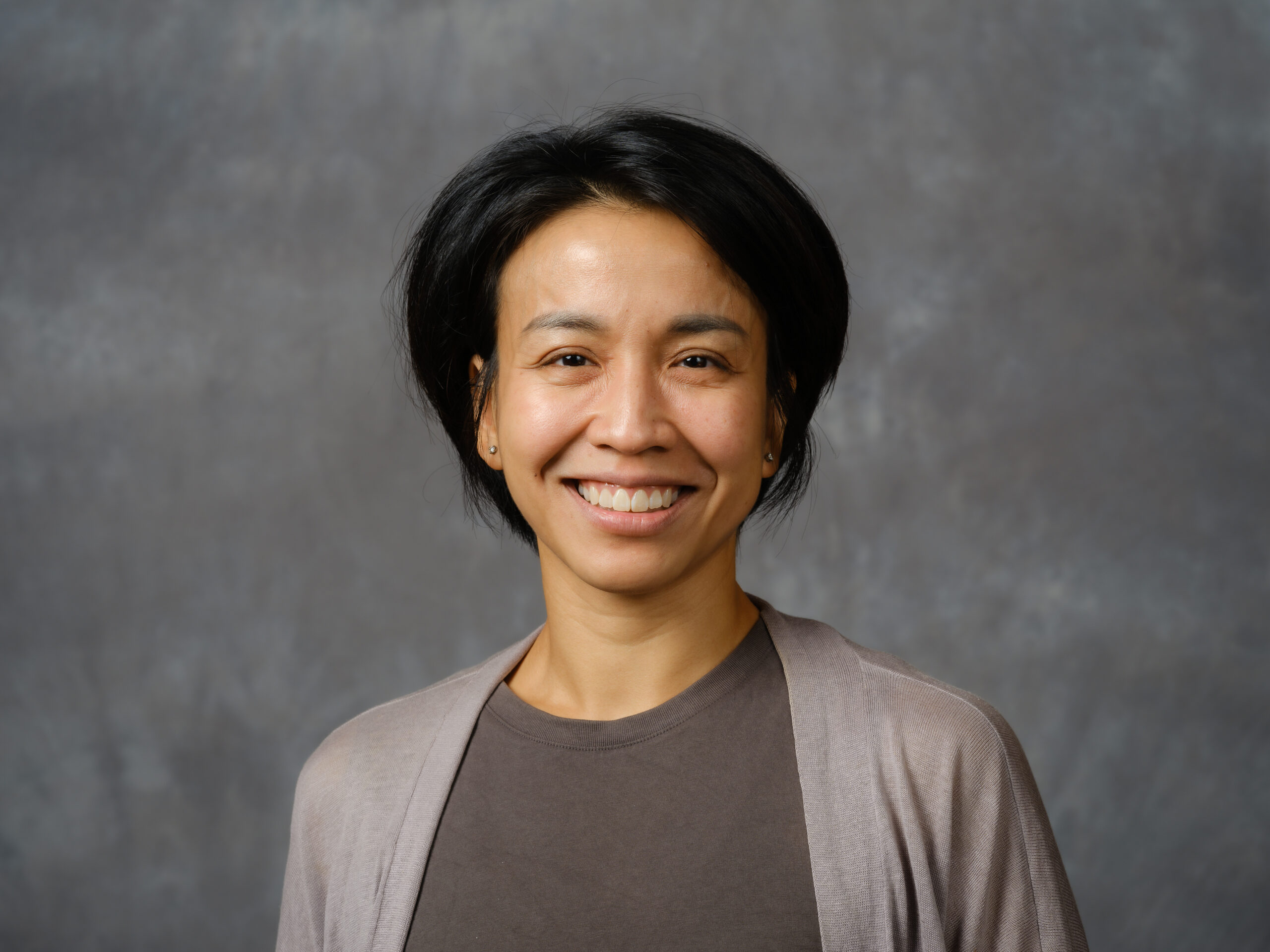
Dr. Risa Toha
Associate Professor, Wake Forest University
Member since 2005
How did you learn about APSA? When did you become a member of APSA, and what prompted you to join?
I learned about APSA in my first year as a graduate student at the University of California, Los Angeles. I had never heard about it before, but one friend asked if I planned on attending APSA, and I looked it up online. Later on, my dissertation advisers, Barbara Geddes and Michael Ross, encouraged me to submit my paper on district boundaries revisions in Indonesia to present at the 2009 APSA in Toronto. It was my first-ever APSA presentation, and I remember being so nervous! So many years later, the work from that paper went into a chapter of my book, Rioting for Representation, published by Cambridge University Press in 2021.
How have APSA membership and services been valuable to you as a student?
APSA has been so valuable for me throughout my career. At an earlier stage of my career, I went to APSA to present my research, meet new people, and learn about other people’s work. I have contacted people whose works I have admired for a long time and whom I view as giants in the field, to just ask if I could chat and meet with them over coffee after their panels. To my surprise, a lot of them are actually very open to meeting new people at APSA and they are very generous with their feedback and comments. As I progressed, my network expanded and included people based at various institutions and countries, and APSA became this regular point where I could see people from different institutions and stages of my career, touch base with coauthors. When I was working on my first book, APSA became a natural point to meet and catch up with my editor. I love the book exhibit, because I can very quickly peruse the latest and best books in the discipline.
Beyond that, APSA also offers many opportunities to mentor and meet early-career scholars. For example, in the past few years, I’ve had the opportunity to organize several pre-APSA research development workshops for early-career scholars who are based in Southeast Asia, and who are writing on Southeast Asia politics. Participants would come in from various countries, and we’d spend a whole day reading and discussing everyone’s papers. These workshops allow scholars to meet, read each other’s works, and get to know each other better.
Can you tell us about your professional background and your research?
I am a scholar of comparative ethnic politics and political violence, with an area focus on Southeast Asia. I earned my PhD in Political Science at the University of California, Los Angeles. I am now an Associate Professor at Wake Forest University. Prior to this role, I was an Assistant Professor at Yale-NUS College in Singapore, a Visiting Assistant Professor at Wheaton College, and a postdoctoral fellow at the Harvard Kennedy School of Government Ash Center for Democratic Governance and Innovation.
The questions I examine in my research are incredibly personal. I grew up in Indonesia and became interested in political science when I witnessed the overthrow of former President Suharto in 1998 and the episodes of violence against ethnic Chinese minorities and subsequent communal riots. I had naively believed that Suharto’s New Order regime was invincible. The mass protests of 1998 felt like they came out of nowhere and I wanted to understand how transitions occurred. I pursued this interest in my undergraduate senior thesis at Princeton University, and then again in my dissertation at UCLA. By the time I was at UCLA, I realized that it was the violence part that really fascinated me. I became more interested in the mobilization ethnic and religious loyalties and how they can be manipulated to produce waves of violence. The results from this line of inquiry were published in my book, and in solo and jointly-authored papers in the British Journal of Political Science, Terrorism and Political Violence, and Electoral Studies, among others.
More recently, my current work examines identity formation and mobilization in Southeast Asia. I use survey and field experiments, archives- and interviews-based research to study the determinants of citizens’ identification and attitudes. I am currently working on a second book on this topic.
WHICH APSA PROGRAMS OR EVENTS WOULD YOU RECOMMEND TO PEOPLE WHO ARE NOT MEMBERS OF THE ASSOCIATION, AND WHY?
I strongly encourage everyone to join APSA and a few sections and/or related groups. These sections and related groups offer opportunities for more contact and collaboration with others who are working on similar questions, and are professionally very valuable.
I am also a member (and former chair) of the APSA Southeast Asia Politics Related Group. The group awards paper prizes, and organizes pre-conference workshops, panels, business meetings, and receptions. But beyond that, the group also has a website where we post information about APSA panels related to Southeast Asia, and a syllabus bank where members can share their sample syllabi on classes related to Southeast Asia. This syllabus bank is very helpful every time I update my syllabi.
IS THERE ANYTHING ELSE YOU’D LIKE PEOPLE TO KNOW ABOUT YOU OR THE WORK THAT YOU DO?
Community and mentoring is so important. I can honestly say I probably would not be an academic if I had not found the communities of peers and mentors who set aside time to read my work, offer comments, and introduce me to new people. My dissertation committee members at UCLA – Michael Ross, Barbara Geddes, Daniel Posner, and Daniel Treisman – were early supporters of my work. I was fortunate to be named a fellow of the Southeast Asia Research Group (SEAREG), where I met so many fellow Southeast Asia scholars—Eddy Malesky, Tom Pepinsky, Dan Slater, Allen Hicken, Amy Liu, Joel Selway, Nico Ravanilla, Paul Schuler, Kai Ostwald, Meredith Weiss, to name a few. I now sit on the SEAREG council and it is very exciting to watch the organization expand over the years and new graduate students come to SEAREG, workshop their ideas and papers, and find new coauthors and build friendships.
At my institution, I work with and mentor a lot of undergraduate students, who take my classes, write their senior capstones under my supervision, and work as research assistants on my projects. Some of my (former) students are coauthors and are now pursuing their graduate studies. Witnessing their progress and development, and working alongside them, has been one of the most rewarding parts of my work.