
2026-2027 APSA Diversity Fellowship Program (Spring)
The following students were named as 2026-2027 APSA Diversity Fellowship Program recipients during the spring 2026 application cycle. These fellows are currently in the first or second year of PhD programs in political science.
- Hana Abdulla, University of California, Irvine
- Eman Alahmadi, The University of Texas at Austin
- Esam Boraey, Cornell University
- Jaime Carbajal, University of Texas at Austin
- Nicolás Cárdenas-Miller, University of North Carolina at Chapel Hill
- Niko Dawson, Washington University in St. Louis
- Nathan Englehart, Washington University in St. Louis
- Antonio Garcia, Florida International University
- Briana Garcia, University of Michigan
- Natalie Garcia, Brown University
- Taylor Gibson Campbell, Temple University
- Fernanda Gonzalez, Duke University
- Nicholas Gonzalez, Northwestern University
- Madia Harris, Northwestern University
- Sashi Juarez-Galindo, University of Maryland, College Park
- Maya Kerr Coste, Penn State University
- Yasir Kuoti, Boston University
- Emily Martinez, University of Wisconsin-Madison
- Gideon Ondap, University of Maryland, College Park
- Angelica Remache Lopez, University of California, Berkeley
- Elina Rodriguez, University of California, Berkeley
- Cameron Thomas-Shah, Johns Hopkins University
- Amalia Torrecillas Fernandez, CUNY Graduate Center
- Zabdi Velasquez Zavalza, University of California, Los Angeles
Meet the DFP Fellows
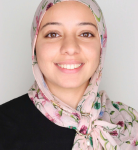
Hana Abdulla is a first-year PhD student in the Department of Political Science at the University of California, Irvine. Her subfields are comparative politics and international relations. Her research focuses on authoritarianism, surveillance, environmental politics, and religion, with particular attention to how these dynamics intersect with gender, race, and ethnicity. She earned her B.A. in political science, graduating cum laude from the University of California, Irvine at the age of 19 as a first-generation college student. Her academic interests were shaped by her upbringing in the Middle East during the Arab Spring, where exposure to political unrest and authoritarian governance sparked her early commitment to the study of politics and inspired her accelerated academic path. Her scholarly goals include contributing to research that deepens understanding of political institutions and state-society relations while engaging with ongoing debates in comparative politics and international relations. She also aims to develop as an educator in areas such as comparative politics, Middle East politics, and global political dynamics.
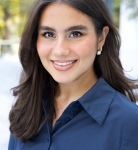
Eman Alahmadi is a second-year PhD student in the Department of Government at the University of Texas at Austin. Her research sits at the intersection of American politics, legislative behavior, and political institutions, with a focus on how interpersonal relationships among members of Congress shape legislative collaboration. She also examines how gender shapes the congressional experience, paying attention to the challenges women face as legislators. As a scholar of Arab and Hispanic descent, Eman brings a distinct multicultural perspective to the study of American legislative institutions. Her work is motivated by a belief that diverse voices are essential to understanding American political institutions. After completing her doctoral degree, Eman hopes to pursue a career in academia, where she can continue studying the social fabric of Congress, and hopefully excite more women and women of color to join the field of congressional studies.
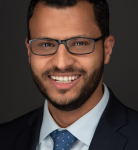
Esam Boraey is a PhD student in the Department of Government at Cornell University, where he is also a 2026 APSA Diversity Fellow. His subfields are comparative political economy and business strategy, with a regional focus on the Middle East and North Africa. Esam’s research examines how institutional environments shape entrepreneurial activity among marginalized communities, including immigrants, political asylees, and women entrepreneurs in contexts of weak governance and social upheaval. His work sits at the intersection of political economy, organizational theory, and social movements, asking how state structures, informal networks, and political shocks determine who gets to build and sustain firms, and under what conditions. His scholarship has been recognized with a Best Paper designation from the Academy of Management’s Entrepreneurship Division, has appeared in Academy of Management Proceedings, and includes manuscripts currently under review at Organization Science.
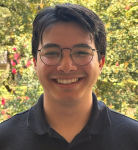
Jaime Andres Carbajal is a second-year Ph.D. student studying American politics and political methodology in the Department of Government at the University of Texas at Austin. Using experimental methods, his research focuses on public opinion and voting behavior of marginalized groups, such as Latinos, African Americans, and women. His studies rely on hypothetical candidates and vignettes to analyze how these voters respond to candidate characteristics, from appearance to political behavior. Prior to joining UT Austin, Jaime received his Bachelor of Arts from the University of Texas at El Paso, where he was a research assistant in the political science and psychology departments. Going forward, Jaime plans to pursue a career in academia and continue researching American political behavior and contributing to experimental methodology.

Nicolas Cardenas-Miller is a Ph.D. student at the University of North Carolina at Chapel Hill studying political economy with a regional focus on Latin America using causal inference applied to observational data. He completed undergraduate degrees in economics (B.S.) and political science (B.S.) from the Schreyer Honors College at the Pennsylvania State University in 2025. During his undergraduate studies, Nicolas also pursued multidisciplinary research in linguistics and psychology, receiving the National Science Foundation Partnerships for International Research and Education (PIRE) fellowship to conduct socio-phonetic experiments at the Universidad de Granada, Spain. Subsequently, his work in psychology, which focused on visual attention and memory, was published in the journal Memory & Cognition in 2023. At Chapel Hill, Nicolas is interested in examining the microfoundations of economic preferences in Latin America under information constraints and biases. He is interested in the ways in which these foundations influence policy decisions from the bottom up. After graduate school, Nicolas plans to pursue a research career to advance understandings of political economy and to continue to pursue multidisciplinary approaches to political science.
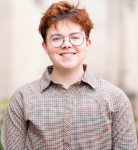
Nikolas Dawson (he/they) is a second-year political science PhD student at Washington University in St. Louis, specializing in formal theory and American politics. His fields of study include political behavior, elites, and minority politics (broadly defined). He received his bachelor’s degree in quantitative economics with minors in political science and math from Weber State University. During this time, he completed several research projects focused on voter behavior and gender that won awards for Best Paper at ISA-West and the Utah Academy of Science Arts and Letters (UASAL). In graduate school and through the rest of his academic career, he hopes to bridge the gap between Gender Politics and Formal Theory by using formal models to answer questions about prejudice and behavior in the context of identity. He is especially interested in why political elites target minority groups through rhetoric or policy changes and the effect this can have on prejudicial attitudes and minority progress. After completing his PhD, he intends to pursue a career in academia, to teach and inspire gender and other minority scholars to pursue unconventional paths of research.

Nathan Englehart (he/him/his) is a second year PhD student and Richard J. Walter PhD scholar at Washington University in St. Louis. Nathan’s current research focuses on gender and politics (with a focus on men and masculinity), and quantitative political methodology (computational social science, causal inference, and experiments). Prior to pursuing his PhD, Nathan graduated from Oberlin College, where he was awarded the Robert Geitz Phi Beta Kappa and Norman J. Goldring Prizes. He subsequently worked as a financial engineer on the modeling and analytics team at the Oakleaf Group. Nathan is an editorial assistant at Political Analysis and an active member of Washington University’s Political Data Science Lab, American Politics Workshop, and Politics of Marginalized Groups Workshop. He has presented his work at MPSA annual meetings, the 20th Anniversary of Politics and Gender conference (PAG), and the 2nd Mid-American Conference for Race, Gender, Immigration and Ethnicity Politics (MARGIE). In the latter, he was awarded best graduate student poster. After graduating from Washington University, Nathan plans to pursue a career in academia, where he hopes to continue working at the intersection of gender and politics and political methodology.
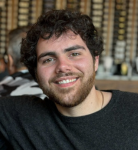
Antonio Garcia is a Cuban-American first year PhD student in political science at Florida International University, specializing in political theory. He earned his B.A. in philosophy and political science from FIU, graduating magna cum laude and as a member of Phi Beta Kappa. His research interests are in the broader history of political thought, critical theory, Rousseau, and is currently working on the political imagination.

Briana Garcia is a doctoral student in the Department of Political Science at the University of Michigan and serves as a Board Representative for Rackham Student Government. Her work in American politics examines psychological, behavioral, and identity-based dynamics, with a focus on how racial and religious identities shape political behavior and public opinion. More specifically, she analyzes differences in political behavior and public opinion among Jewish and Hispanic voters relative to White and Black Americans. She is an active member of the Interdisciplinary Workshop on Comparative Politics (IWCP) and the American Contention Working Group (ACWG). Prior to beginning her doctoral studies, Briana earned a B.S. in government and politics from the University of Maryland, where she was affiliated with the Interdisciplinary Laboratory of Computational Social Science (iLCSS). She also holds an A.A. in arts and sciences from the College of Southern Maryland.
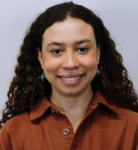
Taylor Gibson Campbell is a second-year PhD student in the Department of Political Science at Temple University. She graduated magna cum laude with a bachelor’s degree in political science from the West Chester University Honors College. Her research focuses on American politics, with specific interests in carceral politics, historical institutionalism, and the intersections of race and class. Her current doctoral work uses archival research to examine how race, class, and political machines shaped municipal policy and enforcement in early twentieth-century Philadelphia during the Great Migration. Her long-term research agenda aims to extend this work through comparative analyses of political development across other major northern cities, including New York and Boston, to deepen scholarly understanding of urban institutional inequality. Beyond her research, Taylor is a dedicated educator with teaching interests in American government, political philosophy, and research methods. She is also committed to fostering rigorous student inquiry through substantive feedback and mentorship. As an APSA Diversity Fellow, she looks forward to advancing her research and teaching while engaging with the broader APSA scholarly community. Originally from the greater Philadelphia area, she is also an avid Eagles fan and cat owner.

Fernanda Gonzalez is a PhD student in the Department of Political Science at Duke University. Her fields of study are political behavior and identity, and race and ethnic politics (REP). Her current research examines how racial identity shifts over time, theorizing that it follows predictable cycles shaped by the cultural calendar. Her prior work has explored nonpartisan elections and the availability of Spanish-language translations in political and institutional contexts. During her PhD, she aims to study identity shifts as well as how language interacts with identity to shape cultural connection, and whether the erosion of Spanish fluency affects broader senses of Latinidad within bilingual Latino communities. Fernanda holds a BA in political science from Wellesley College and is a proud alumna of the Ralph Bunche Summer Institute. After completing her PhD, she plans to pursue a career in academia, continuing researching how institutions can either reinforce marginalization or foster belonging.
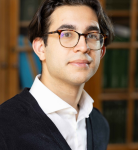
Nicholas R. Gonzalez is a second-year doctoral student in the Department of Political Science at Northwestern University. His subfield is American politics, with research interests spanning political behavior, urban politics, and the intersections of race, class, and political economy. Prior to arriving at Northwestern, Nicholas completed his master’s degree in political science at the University at Albany and his bachelor’s degree in political science at The City College of New York. As a doctoral student, he is currently working on two research projects, one examining racial resentment using survey data, and another exploring the administration of David Dinkins, New York City’s first Black mayor, through archival research drawn from New York City’s municipal archives. He employs both quantitative and qualitative methods across his work. Nicholas also serves as the Workshop Coordinator for Northwestern’s Racial and Ethnic Politics Workshop. After completing his doctorate, he hopes to pursue a career in academia, where he aims to teach courses on urban politics, race and ethnicity in American politics, and political economy.
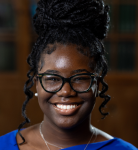
Madia Harris is a second-year PhD student in political science at Northwestern University, where she studies American politics. Madia is a 2024 graduate of the illustrious North Carolina A&T State University, where she graduated summa cum laude with a bachelor’s degree in political science at 19 years old. Her work examines structural racism and the mechanisms that sustain existing inequality. In her work on educational disparities, she analyzes how discrimination, socioeconomic status, geography, and policy interact to reproduce unequal outcomes for marginalized youth. She has also researched the representation of Black political thought within higher education curricula. Finally, her work on the implementation of reparations programs highlights how the pursuit of transitional justice can be stifled under restrictive political conditions. In her more recent work, she interrogates the political consequences of an unsettled consensus regarding the parameters of white working-class group membership. She challenges understandings of group membership that absolve some members of accountability by allowing those with more privilege and access to actively bolster white supremacy. Central to her scholarship and service is the principle that knowledge production must be reflective rather than extractive, and that advocacy and practical engagement are inseparable from theoretical rigor.

Sashi Juarez-Galindo is a first-year PhD student in the University of Maryland’s Government and Politics program. His work focuses on race and ethnic politics, Latino politics, intersectionality, and public opinion in the United States. Juarez-Galindo’s dissertation looks to analyze how conflict among Latinos leads to the punishment of vulnerable groups within the community, particularly emphasizing how the intersection of different identities can lead to the exacerbation or circumvention of said punishment, and how tolerance can affect their political participation. He earned his Bachelor of Arts from the University of California, Riverside, where he worked as a research assistant as part of the Minority Serving Institution Research Academy (MSIRA). At the University of Maryland, he became involved in the Interdisciplinary Laboratory of Computational Social Science (iLCSS) and the Center for Democracy and Civic Engagement (CDCE). Juarez-Galindo aims to continue working in academia after acquiring his PhD and to help other first-generation children of immigrants feel more comfortable in higher education.

Maya Kerr Coste is a second-year PhD student in Penn State’s Political Science Department. Her subfield is American politics. Maya’s research examines how the boundaries of “legitimate” political violence shift during periods of racial and political change in the United States. She studies how perceptions of threat, moral status, and political belonging are constructed and contested through elite signaling and racial status dynamics. Her current work experimentally analyzes the impact of elite moral framing and normative cues about social groups to influence public attitudes toward political violence. By centering the role of race, power, and group hierarchy in structuring these attitudes, Maya seeks to deepen our understanding of the conditions under which political violence becomes tolerated or justified in democratic contexts. Her work aims to advance both the understanding of political violence and also identify pathways for reducing public tolerance for harm and exclusion.
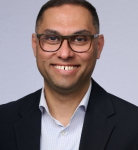
Yasir Kuoti is a Ph.D. student in the Department of Political Science at Boston University, specializing in international relations and comparative politics, with a regional focus on the Middle East. He earned his B.A. in international studies from the University of Wisconsin at Stevens Point (magna cum laude) and his M.A. in international affairs from Marquette University. In the long term, Yasir aims to pursue an academic career centered on teaching, research, and contributing to scholarly and policy debates on Middle East politics, identity and ethnic politics, and political violence. He is also committed to “paying it forward” by mentoring the next generation of scholars from disadvantaged or minority backgrounds, drawing on his own experience as a first-generation student of Middle Eastern descent.
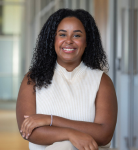
Emily R. Martinez is a second-year PhD student in the Department of Political Science at the University of Wisconsin–Madison, specializing in comparative politics with a regional focus on Western Europe. Her research sits at the intersection of religion and politics, examining church-state relations, religious authority, and the politics of secularization in advanced democracies. Her current work develops a comparative study of religious institutions and political influence in the United States and the United Kingdom, investigating how churches retain authority under conditions of secularization. Her broader interests include political theology, public opinion on religion, and comparative church-state relations. Her target population is clergy. After completing her doctorate, Emily intends to pursue a career in academia, contributing to scholarship on the enduring role of religious authority in democratic politics.

Gideon Ondap III is a second-year government and politics PhD student and a recipient of the President’s Fellowship at the University of Maryland, College Park. Gideon studies American politics with a focus on race and ethnic politics, political attitudes, and group consciousness. His research examines how racial groups develop political attitudes—particularly linked fate—using survey data and experimental methods. Through this research, he seeks to explain how racialized social structures shape group interests, perceptions of group position, and political behavior. Gideon is a first-generation Filipino immigrant, a native of the Coachella Valley, and a proud product of the California Community College system. He received his B.A. in political science from California State Polytechnic University, Pomona before continuing his academic journey on the east coast. Upon completing his doctorate, he aims to advance scholarship on race and ethnic politics while mentoring and supporting the next generation of scholars from underrepresented backgrounds.
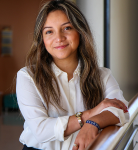
Angelica Remache Lopez is a Ph.D. student in the Department of Political Science at the University of California, Berkeley, specializing in comparative politics, political economy, and methods. She holds a B.A. in economics and political science from the University of Wisconsin and a master’s in international relations from Harvard University. Her research sits at the intersection of political economy, migration, and democratic governance, with a regional focus on Latin America. Her current project examines political corruption as a structural push factor for emigration. She employs a mixed-methods approach in her research, combining applied causal inference techniques with original qualitative fieldwork. Upon completing her doctorate, Angelica hopes to pursue a career in academia, where she can continue her scholarly agenda and help build a more inclusive discipline, one in which students from underrepresented communities see themselves reflected in the academy.

Elina Rodriguez is a second-year PhD student at the University of California, Berkeley, in the Department of Political Science, studying American politics. Her research interests pertain to the study of state violence, the administrative state, and American political development. Prior to starting her PhD, Elina graduated from New York University with a BA in political science and history and received an MA in political science from Columbia University. In the future, she hopes to remain in academia to continue pursuing her research and to teach courses in her field.
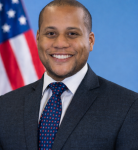
Cameron Thomas-Shah is a doctoral student at Johns Hopkins University School of Advanced International Studies (SAIS). His research focuses on the impact of foreign malign influence on social movements within the United States. Building on a decade of foreign policy experience, Cameron’s dissertation examines the motivations behind malign influence operations and how these dynamics can inform democratic strategies for building more resilient and discerning information environments while protecting fundamental freedoms. Cameron holds an MA in international economics and American foreign policy from Johns Hopkins SAIS and a BA in international studies from Morehouse College.
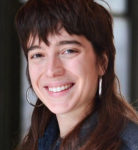
Amalia Torrecillas Fernández is a Ph.D. student in political science at the CUNY Graduate Center. Her research focuses on economic inequality, informal labor, and the design of social welfare policies in Latin America and the United States. She examines how gender, queerness, and informality intersect to shape access to economic opportunity and state protection. Amalia holds a B.A. in political science, summa cum laude, from Baruch College (CUNY), and an M.A. in political science from The Graduate Center. She currently teaches American Government: Practices & Values at Baruch College.
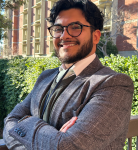
Zabdi R. Velásquez Zavalza is a second-year PhD student in the Department of Political Science at UCLA. He specializes in comparative politics and race, ethnicity, and politics, with a minor in environmental politics and governance and a regional focus on Latin America and marginalized communities in the United States. Zabdi’s work examines how access to essential public goods and services, such as water, sanitation, and waste infrastructure, shapes political attitudes, civic engagement, and perceptions of state responsiveness among historically underserved populations. Using mixed-methods approaches, including GIS spatial analysis, archival research, and surveys, his current research explores environmental inequality, informal waste dumping, and other environmental harms in Los Angeles and Mexico. Prior to UCLA, Zabdi earned his BA in political science and international affairs from the University of California, Riverside, where he conducted research on the Lithium Valley project in his home community of Imperial County, CA. As an APSA Diversity Fellow, he aims to produce policy-relevant scholarship that advances environmental justice and strengthens democratic inclusion. He aspires to a career in academia, where he can teach courses on comparative politics, environmental governance, and inequality while mentoring first-generation and underrepresented students.