
2026 Advancing Research Grants for Early Career Scholars Recipients
The APSA Diversity and Inclusion Advancing Research Grants provide support for research that examines political science phenomena affecting historically underserved communities and underrepresented groups and communities. In July 2026, APSA awarded 15 projects for the APSA Diversity and Inclusion Advancing Research Grant for Early Career Scholars for a combined total award amount of 30,000. Read more about the funded projects here:
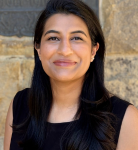
Project Title: Women’s Communities, Work, and Politics: Compensatory Behavior in South Asia and Beyond
Researcher Bio:
Natalya Adam-Rahman, University of Calgary
Natalya Adam-Rahman, Ph.D., is an assistant professor of government at the University of Calgary. She conducts research on women, gender, and politics in the Global South. Her work examines how social norms and household dynamics shape women’s political empowerment in South Asia, specifically Pakistan and India. Prior to joining the University of Calgary, Dr. Adam-Rahman was a Lecturer at Stanford University’s Civic, Liberal, and Global Education Program. She earned her PhD and MA in political science from Stanford University and her undergraduate degree in politics from Princeton University.

Project Title: How Do Algorithms Think? Generative Artificial Intelligence and the Construction of ‘Woman’ as a Political Concept
Researcher Bio:
Hannah Maruci Aflalo, Brazilian Center for Analysis and Planning
Hannah Maruci Aflalo is a postdoctoral researcher in the International Program at CEBRAP (Brazilian Center for Analysis and Planning) and a political scientist whose career bridges the gap between academic research and political action within gender and politics. She holds a PhD from the University of São Paulo (USP) and she was a visiting scholar at Humboldt University through the Center for Transdisciplinary Gender Studies (2022 and 2025). Her current research, titled “How Do Algorithms Think? Generative Artificial Intelligence and the Construction of ‘Woman’ as a Political Concept” approaches algorithmic bias by exploring how generative AI actively constructs and shapes political and gender concepts. Her perspective as an LGBTQ+ scholar from the Global South deeply informs her research into who controls political definitions and how generative technologies replicate historical biases against marginalized women. Translating research into tangible social impact, Hannah co-founded and served as Executive Director of the NGO A Tenda das Candidatas for over four years, training over 1,000 women for political office and contributing to 350,000 votes cast. She brings extensive experience in applied qualitative research, political consulting and advocacy. Her work has led to publications in international journals and the drafting of a national bill to combat gender and race-based political violence.

Project Title: Traditional Gender Attitudes and Support for Political Violence
Researcher Bio:
Olyvia R. Christley, Washington State University
Olyvia R. Christley is an assistant professor of global politics at Washington State University. Her research focuses on the political psychology of nationalism, xenophobia, and gendered attitudes in Europe and the United States, with particular interest in how these phenomena shape support for far-right ideologies and how they correlate with conspiratorial thinking. Her research has been published in journals such as Political Behavior, Politics & Gender, and Politics, Groups, & Identities. Prior to her career in academia, she worked for the United States House of Representatives and the Virginia House of Delegates.
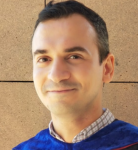
Project Title: The Click Gap: Revealing Hidden Bias in How Voters Engage with Candidate Race and Gender
Researcher Bio:
Fatih Erol, University of Idaho
Fatih Erol is currently a postdoctoral fellow in political psychology in the Department of Politics and Philosophy at the University of Idaho, and he previously served as a Research Social Scientist and Lab Manager at the University of Arizona’s School of Government and Public Policy. His research program spans comparative political behavior, political psychology, causal inference, and measurement.
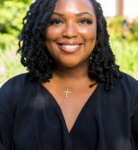
Project Title: What You Don’t Know Won’t Hurt You: Understanding the Relationship Between Political Knowledge and Political Efficacy
Researcher Bio:
Jasmine C. Jackson, Texas Christian University
Dr. Jasmine C. Jackson is an assistant professor of political science at Texas Christian University. She graduated from Purdue University in 2022 with her Ph.D. in political science and a certificate in African American studies. Dr. Jackson is an American politics scholar focusing specifically on Black politics and political behavior. She examines the political knowledge levels of the Black community and how they decide what political information is relevant for the group to know. Regarding Black political elites, Dr. Jackson assesses the behavior of Black political elites, concentrating on the strategies they employ to advocate for substantive issues pertinent to the Black community. Together, her research speaks to the importance of understanding variation in the American polity and emphasizes the need to understand these differences to move the discipline forward.

Project Title: Relational Sovereignties: Binding Futures, Performing Intimacies, and Insurgent Archives
Researcher Bio:
Kamalani M. F. H. Johnson, Brown University
Kamalani M. F. H. Johnson is the Artemis A. W. and Martha Joukowsky Postdoctoral Research Associate in Gender and Sexuality Studies at the Pembroke Center for Teaching and Research on Women at Brown University. Johnson earned a Ph.D. in political science from the University of Hawaiʻi at Mānoa, specializing in Indigenous politics and political theory. As a political theorist, literary theorist, and literary historian, Johnson’s research investigates the deployment of state statutory law, property regimes, and carceral surveillance as mechanisms of colonial management, alongside the counter-infrastructures designed by subaltern communities to preserve relational and intellectual sovereignty. Utilizing an elite text-critical mastery of nineteenth- and twentieth-century non-English print networks, Johnson’s current book project, Insurgent Archives: Intellectual Binding and Political Ontologies of Refusal, theorizes pūkuʻi (binding) as a Kanaka Maoli methodology for refusing biopolitical containment. Johnson is a recipient of the 2026 Law and Humanities Junior Scholar Award, a 2026 Fellow at the Institute for Critical Social Inquiry (ICSI) at The New School for Social Research, and this project has received back-to-back funding from the American Political Science Association (APSA), including the 2025 Advancing Research Grant for Indigenous Politics and the 2026–2027 Advancing Research Grant for Early Career Scholars. His peer-reviewed research on intellectual sovereignty, language revitalization, gender and sexuality, and philosophy appears or is forthcoming in flagship journals including American Quarterly, PMLA, Biography, Hūlili, ADVA, and Journal of World Philosophies.

Project Title: Race-Neutral Design?: Policy Design and the Racialization of Welfare Opinion
Researcher Bio:
Lucia Lopez, North Carolina State University
Lucia Lopez is a licensed attorney and assistant professor of political science. Her research lies at the intersection of public opinion, public policy, and law, drawing on insights from political psychology to understand how policy design, misperceptions, and perceptions of deservingness shape what Americans think about government programs and the people who benefit from them. Her research has been generously funded by the Rapoport Family Foundation and the Russell Sage Foundation and has been published in Public Opinion Quarterly, Political Research Quarterly, and the Cleveland State Law Review.
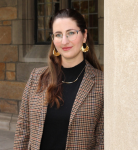
Project Title: Minority Coalitions: LGBTQ+ Representation in Congress
Researcher Bio:
Sara Morell, The College of New Jersey
Sara Morell is an assistant professor of political science at The College of New Jersey. Her research addresses questions of political identity and representation in American politics, with an emphasis on gender and sexuality. In this current project, she builds on her experiences as a 2025-2026 APSA Congressional Fellow; to understand how small minority groups form larger coalitions to achieve their policy goals, by looking at the circumstances under which non-LGBTQ+ members of Congress engage in substantive representation of LGBTQ+ Americans. Her research has been published in the British Journal of Political Science, Political Psychology, and Public Opinion Quarterly, among others. She received her Ph.D. from the University of Michigan in 2023 and a B.A. in political science from Swarthmore College in 2015.

Project Title: State of the Environment: State Politics, Policy Feedback, and Environmental Restoration
Researcher Bio:
Naomi Nubin-Sellers, Dartmouth College
Naomi Nubin-Sellers is a postdoctoral research fellow at the Nelson A. Rockefeller Center at Dartmouth College. Her research focuses on public policy, state politics, and racial and ethnic politics, with a particular interest in understanding how the design of means-tested social programs shapes the political lives of the people who depend on them. Her current work asks how punitive policy features such as sanctions, surveillance, and bureaucratic burden function as barriers to full democratic participation for low-income households of color, and what that means for the health of American democracy. Her peer-reviewed work is forthcoming in State Politics and Policy Quarterly. Her newest work examines how state political institutions shape environmental remediation outcomes at toxic waste sites and how those outcomes feed back into the democratic attitudes of the communities who bear a disproportionate burden of toxic exposure.
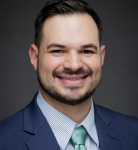
Project Title: Beyond the Pill: The Socio-Political Dimensions of PrEP Awareness, Access, and Adoption
Researcher Bio:
José O. Pérez, Texas A&M University – San Antonio
José O. Pérez is an assistant professor of political science at Texas A&M University-San Antonio and holds a Ph.D. in political science from The Ohio State University (2025). His main research and teaching areas are critical security studies, migration and refugee politics, gender and race in global politics, and global health politics, with a regional focus on Latin American politics. Previous research publications include peer-reviewed articles in: European Journal of International Relations, Security Studies, International Feminist Journal of Politics, and Security Dialogue. His current research work includes collaborative work on the socio-political dimensions of PrEP awareness and access, as well as the ramifications that PrEP has on both its users and non-users, among other projects.
Emily Naasz, Texas A&M University – San Antonio
Sarah Pollock, Texas A&M University – San Antonio
Joseph Simpson, Texas A&M University – San Antonio
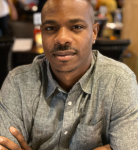
Project Title: Tracing the Takeover: Race, Citizenship, and the Politics of Failure
Researcher Bio:
AJ Rice, University of California, Santa Barbara
AJ Rice is an assistant professor of political science at the University of California, Santa Barbara, with faculty affiliations in the Department of Black Studies and the Center for Black Studies Research. Working at the intersection of African American politics, American political economy, and education policy, he studies race and democracy in American political development. His first book, Tracing the Takeover: Race, Citizenship, and the Politics of Failure, examines how state takeovers of majority-Black school districts and cities suspend local democratic authority, producing what he theorizes as conditional citizenship. The book centers on Detroit public schools, tracing Michigan’s takeover politics from 1988 to 2016 through elite interviews, discourse analysis of legislative records, survey data, and archival research. The APSA Advancing Research Grant will support the book’s final archival research at the Bentley Historical Library and the Walter P. Reuther Library. His scholarship has appeared in Souls: A Critical Journal of Black Politics, Culture, and Society and The Popular Culture Studies Journal. A former University of California President’s Postdoctoral Fellow at UCLA, Rice holds a Ph.D. in African American and African studies from Michigan State University. He spent twelve years as program manager of Detroit’s My Brother’s Keeper mentoring program.
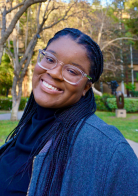
Project Title: Saviors or Scapegoats: Black Women in the Democratic Party
Researcher Bio:
Crystal Robertson, University of California, Irvine
Crystal Robertson, Ph.D. is an assistant professor of political science at the University of California, Irvine. Before this she was a University of California President’s Postdoctoral Fellow. She earned her PhD at the University of California, Los Angeles with concentrations in American politics and race, ethnicity, and politics. Her current research focuses on the role of sexism in Black political behavior. More broadly her research includes racial politics, gender politics, and social movements. Her work has been published in the American Political Science Review, Political Behavior, and the Washington Post.
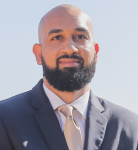
Project Title: Strategy and Sincerity: How Black Voters Choose Candidates in Majority-Black Congressional Districts
Researcher Bio:
Kevin Sparrow, Georgia State University
Kevin Sparrow is an assistant professor of political science at Georgia State University, where he teaches graduate and undergraduate courses on American Politics, African American Politics, and Voting, Elections, and Public Opinion in the United States. His research centers on American political behavior, with a focus on race, electoral politics, and vote choice. He uses randomized experiments, large-N statistical analysis, and focus group interviews to examine how voters make decisions in electoral settings. His current book project, Strategy and Sincerity: How Black Voters Choose Candidates in Majority-Black Congressional Districts, shows how Black voters rely on both strategic cues and sincere ideological preferences to select candidates in congressional primaries. His other research explores political mobilization, candidate messaging, and descriptive representation in American elections.
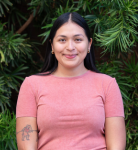
Project Title: Political Responses to Gender-Based Violence
Researcher Bio:
Angie Torres-Beltran, University of Arizona
Angie Torres-Beltran is an assistant professor in the School of Government and Public Policy at the University of Arizona. She is also a Research Affiliate in the Eliminating Violence Against Women Lab. Her research examines how gender-based violence shapes political engagement and development in Latin America and Mexico, in particular. Her research has been published in International Studies Quarterly, Political Science Research and Methods, and Politics, Groups, and Identities, among others, and has been featured in Nexos and The Washington Post. She holds a B.A. from the University of Central Florida and Ph.D. from Cornell University.

Project Title: The Politics of Being a Soccer Fan: Feminist Activism Around Soccer in Brazil
Researcher Bio:
Luisa Turbino Torres, Florida Atlantic University
Luisa Turbino Torres (she/they) is an assistant professor with a joint appointment in political science and women, gender & sexuality studies at Florida Atlantic University, where she also serves as Senior Associate Director of the Leon Charney Diplomacy Program. She received her Ph.D. in political science from the University of Delaware in 2022 and completed her B.A. and M.A. at the Federal University of Minas Gerais in her native Belo Horizonte, Brazil. Her research examines transnational feminist activism, social movements, and the politics of sport in Brazil and Latin America, drawing on interpretivist and ethnographic methods developed through fieldwork with feminist soccer collectives in Belo Horizonte, Porto Alegre, and Recife. Her work develops the concept of “fandom activism” to explain how women soccer fans mobilize for socio-political change. She is currently completing her first book, The Politics of Being a Soccer Fan: An Ethnographic Perspective on Feminist Activism Around Soccer in Brazil.