
2025 Advancing Research Grants for Early Career Scholars Recipients
The APSA Diversity and Inclusion Advancing Research Grants provide support for research that examines political science phenomena affecting historically underserved communities and underrepresented groups and communities. In July 2025, APSA awarded eleven projects for the APSA Diversity and Inclusion Advancing Research Grant for Early Career Scholars for a combined total award amount of $22,000. Read more about the funded projects here:
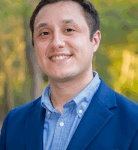
Project Title: The Latino Vote in the U.S.
Researcher Bios:
Francesco Bromo, University of Oxford
Francesco Bromo is a postdoctoral research fellow at the University of Oxford.
Lindsey P. González, Texas A&M University
Lindsey P. González is a Ph.D. student in political science at Texas A&M University.
Manuela Muñoz, Texas Tech University
Manuela Muñoz is an assistant professor of political science at Texas Tech University.
Kristy Pathakis, Texas A&M University
Kristy Pathakis is an assistant professor of political science at Texas A&M University.

Project Title: Fixing Gender: Authoritarianism, Knowledge, and the Politics of Epistemic Control
Researcher Bio:
Elizabeth Corredor, Bryn Mawr College
Elizabeth Corredor is a visiting assistant professor of political science at Bryn Mawr College. She received her Ph.D. in political science from Rutgers University in 2021. She also holds an M.A. in Latin American studies from the University of Chicago (2006) and a certificate in Women’s, Gender, and Sexuality studies from Rutgers University (2018). Her research and teaching are interdisciplinary, situated at the intersections of political science; women’s, gender, and sexuality studies; trans studies; sociology; Latin American studies; and peace and conflict studies. Her book manuscript, based on her award-winning dissertation, argues that to fully understand the gendering of peace negotiations and agreements, we must examine not only how many and which women are at the table, but also the gendered and spatial logics embedded in peace processes. Using the 2010–2016 Colombian peace process as a case study, she draws on an original framework that traces the efforts, locations, and gendered logics of both women’s and LGBTIQ+ groups, as well as those of the formal negotiation table. Her analysis reveals how these agendas were accepted, co-opted, and/or resisted within the negotiations and the final agreement. Emerging from this book project, Dr. Corredor also studies how anti-gender and anti-trans mobilizations contribute to epistemological and ontological violence and insecurity—both within the state and at the grassroots level. She is particularly interested in how these campaigns attempt to destabilize and erase identities and knowledge systems through public discourse and policy.

Project Title: Middle Eastern and North African (MENA) American Identity in the United States
Researcher Bio:
Amanda Sahar d’Urso, Georgetown University
Dr. Amanda Sahar d’Urso is an assistant professor of government at Georgetown University. Her research details how Middle Easterners and North Africans (MENA) have been racialized throughout the 20th and 21st century. Her work is published in Perspectives on Politics, Political Science Research and Methods, and the Journal of Race and Ethnic Politics, as well as in public outlets such as Good Authority, The London School of Economics, and The Monkey Cage. During the 2023-2024 academic year, she was a Provost’s Distinguished Faculty Fellow.

Project Title: Gender in the Journals Revisited: A Comprehensive Look at Trends Across Five Decades
Researcher Bios:
Christina Gahn, University of Vienna
Christina Gahn is a postdoctoral researcher in the Department of Government at the University of Vienna (Austria). She earned her doctorate in political science from the Berlin Graduate School of Social Sciences at Humboldt-Universität zu Berlin (Germany) in 2025. Her research focuses on political parties, electoral campaigns, and public opinion polls, with her work published in journals such as the European Journal of Political Research, Party Politics and the International Journal of Press/Politics. She is also an active advocate for gender equality in academia, serving as one of the co-organizers of her department’s women’s group, where she works to support female scholars and address structural issues in the field. Building on this interest, Christina’s current research examines systemic hurdles to gender equity in political science publishing, analyzing authorship trends over five decades.
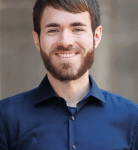
Michael Imre, University of Vienna
Michael Imre is a postdoctoral researcher in the Department of Government at the University of Vienna (Austria). He completed his doctorate in political science from the Graduate School of Economic and Social Sciences at the University of Mannheim (Germany) in 2025. His research interests include political parties and party competition, intra-party politics, coalition governments, and constitutional politics. His work has been published in journals such as the British Journal of Political Science, Electoral Studies, and Party Politics.

Project Title: ALL THE BELOVED I COULDN’T DESCRIBE: Queer-of-Color Illegibility and the 21st Century Crisis of Identity
Researcher Bio:
Isabel Felix Gonzales, University of Virginia
Isabel Felix Gonzales is a Rising Scholars Postdoctoral Fellow in the Department of Women, Gender, and Sexuality at the University of Virginia and a 2025 New City Arts Fellow. Their written and visual work explores the political, material, and popular cultures of the early 21st century. Isabel is particularly interested in how sexuality and gender identity function as important sites for consolidating and re-naturalizing racial capitalism in the aftermath of Obama-era multiculturalism and LGBTQ+ mainstreaming, but also the forms illegibility, unruliness, kin-making, escape, and refusal that queer, trans, and nonbinary people of color employ in response. Their work has been published in The Palgrave Handbook of Fashion and Politics, Terrorism and Popular Culture, and Politics, Groups, and Identities, and in community-run zine collections, including Mala Leche x Sound Justice Lab: Our Bodies, Our Futures and SWARM: Answering the Call. Isabel received a PhD in Political Science from the University of California, Irvine and is currently working on their first book, ALL THE BELOVED I COULDN’T DESCRIBE: Queer Illegibility and 21st Century Crisis of Identity.
Project Title: Developing to Deport: Race, Citizenship, and the Fringes of US Military Social Welfare, 1917-1978
Researcher Bio:
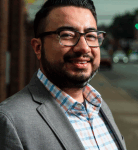
Alfredo Gonzalez, University of California, Santa Barbara
Alfredo Gonzalez is an assistant professor of political science at the University of California, Santa Barbara. His research explores how immigrant and non-citizen military service shapes views on political acculturation, and the extent to which Congress, courts, and veterans’ organizations weigh naturalization as part of a broader scheme of military social welfare benefits. Gonzalez served in the US Marine Corps and is a veteran of Operation Iraqi Freedom.

Project Title: Racialising Climate Change Mobilities in UK, US, and French News Media Coverage
Researcher Bio:
Lydia Ayame Hiraide, Soka University
Lydia Ayame Hiraide is a lecturer at Soka University in the Graduate School of International Peace Studies (SIPS). Her research takes an interdisciplinary approach to the key questions that we are grappling with around a changing climate, gender, identity and inequities, social justice, and the relationship between the Global North and Global South. Previously, Lydia Ayame was a postdoctoral research fellow with the Feminist Centre for Racial Justice (FCRJ), a Teaching Fellow in the department of Politics and International Relations at SOAS, University of London, and Associate Lecturer in the Politics department at Goldsmiths, University of London. Lydia Ayame holds a PhD in politics and international relations from Goldsmiths, University of London which was funded by the UK Arts and Humanities Research Council.

Project Title: Whose Briefs Count? Mapping Regional Influence in Healthcare Cases Before the Supreme Court
Researcher Bios:
Rachael Houston, Texas Christian University
Rachael Houston is an assistant professor of political science at Texas Christian University. Her research explores the intersection of judicial behavior, political communication, and social psychology, focusing on how individuals learn about and form opinions of the U.S. Supreme Court. She has published in journals such as Interest Groups & Advocacy, Journal of Law and Courts, and Political Research Quarterly.
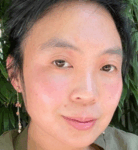
Marcy Shieh, Miami University
Marcy Shieh is an assistant professor in the Department of Political Science at Miami University in Ohio. She studies American politics with a concentration in judicial politics. Her research interests examine the influence of political elites, the mass public, and advocacy groups on the behavior and media coverage of justices on state and federal courts. She applies methods, such as text analysis and survey experiments, to conduct her work.

Christine Bird, Oklahoma State University
Christine C. Bird is an assistant professor of political science at Oklahoma State University. Her research focuses on agenda setting and elite influence in decision-making in law and courts. She is the Director of the Bird Law and Public Policy Lab and an Associate Director of the U.S. Policy Agendas Project. She earned her Ph.D. from the University of Texas and her J.D. from Oklahoma City University. Her work has appeared in Political Research Quarterly, American Politics Research, The Journal of Law and Courts, Interest Groups & Advocacy, and Polity.

Project Title: Does My Wheelchair Slow Me Down? The Interactive Effects of Disability, Race, and Gender in Political Elections
Researcher Bio:
Kyle Hull, Fitchburg State University
Kyle Hull is an assistant professor of political science at Fitchburg State University and formerly a visiting assistant professor at the University of Nebraska-Lincoln, where he also completed his PhD. He holds broad research and teaching interests in political psychology, political behavior, public policy and state and local politics. His primary area of research explores how voters perceive, evaluate, and support political candidates with physical disabilities as well as determinants of support for disability policies.

Project Title: Beyond Demographics: Investigating the Influence of Minority-Owned Businesses on Minority Political Participation
Researcher Bio:
Jongwoo Jeong, Georgia State University
Jongwoo Jeong is an assistant professor of political science at Georgia State University. His research focuses on American political behavior and institutions, with particular emphasis on race, immigration, and polarization. His work has appeared or is forthcoming in journals such as AJPS, JOP, BJPS, Political Behavior, and Politics, Groups, and Identities. He is currently leading a project that investigates how minority-owned businesses shape political participation, ambition, and representation in high-minority communities across the United States, with a particular focus on Georgia, with this opportunity. Recognizing these communities as both vulnerable to political marginalization and rich in civic potential, the project underscores the importance of understanding how place-based institutions foster political resilience and grassroots mobilization. He also collaborates with criminology scholar Young-An Kim to examine how these businesses influence the policy behavior of street-level bureaucrats and local crime patterns. He earned his Ph.D. from Texas A&M University in 2022 and completed a postdoctoral fellowship at Washington University in St. Louis.
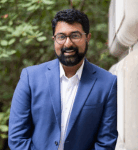
Project Title: Keeping up with the Joneses: When do Civilians Demand Policing?
Researcher Bio:
Arvind Krishnamurthy, Ohio State University
Arvind Krishnamurthy is an assistant professor of political science at The Ohio State University. He received his Ph.D. in political science from Duke University and previously served as a postdoctoral scholar in the Possibility Lab at the UC Berkeley Goldman School of Public Policy. His research sits at the intersection of race, political institutions, and political behavior, with a particular focus on the politics of the criminal legal system in the United States. One strand of his work examines the institutional insulation of municipal police from public influence and democratic oversight. Another investigates questions of local representation and political incorporation for racial and ethnic minorities. His research on these topics is published in journals like the American Political Science Review, Political Psychology, and Political Behavior, and he is a co-author of the Oxford University Press book Deadly Justice: A Statistical Portrait of the Death Penalty.
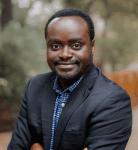
Project Title: Identifying Important Religious Legacies of Ancient African States
Researcher Bio:
Constantine Manda, University of California, Irvine
Constantine Manda is an assistant professor in the Department of Political Science at the University of California, Irvine since July 2023. His area of expertise includes comparative politics and the political economy of development with a regional focus on Africa. At UCI, Dr. Manda teaches courses on African politics, political economy, decolonization, genopolitics, global politics, program evaluation, among others. His work is published in the Journal of Politics, Comparative Political Studies, and the Quarterly Journal of Economics, among others. He is a recipient of a visiting fellowship at the Center for Effective Global Action (CEGA) based at UC Berkeley’s Department of Economics in the Fall of 2012. Dr. Manda is also co-founded the Impact Evaluation Laboratory (IEL) at the Economic and Social Research Foundation (ESRF) in his native Tanzania. Dr. Manda is also a co-founder of the Network of Impact Evaluation Researchers in Africa (NIERA). In recognition for these and other similar efforts, Dr. Manda was named one of the 30 Most Influential Young Economists in Africa in 2022. Over the last twelve years, Dr. Manda has built the capacities of over 465 Black researchers and students in Kenya, Tanzania, Benin, and the United States through Strathmore University’s Business School, UDSM, the African School of Economics, and Yale University, respectively. Dr. Manda has doctoral training in political science from Yale University (2022); a master of public policy from the University of Chicago (2010); and a Bachelor of Arts degree in Economics from Xavier University (2009).
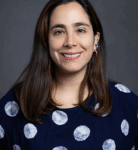
Project Title: Contesting the Inclusionary Turn: Feminist and Antifeminist Narratives in Latin America and the United States
Researcher Bio:
Camila Paez, University of Cincinnati
Camila Paez holds a Ph.D. in political science from Arizona State University, supported by Fulbright. She currently serves as an assistant professor at the University of Cincinnati’s School of Politics and International Affairs. Her research concentrates on women’s contentious politics and policies in Latin America, employing ethnography, interviews, text analysis, and OLS to examine political violence and women’s involvement in social movements. With experience leading projects for women’s rights in government bodies and NGOs, Camila is adept at designing, executing, and managing research and social initiatives. She is also an expert in teaching comparative politics, with a focus on the Global South and women’s roles in politics.

Project Title: Reproducing the World: Life Under Extractive Regimes
Researcher Bio:
Grace Reinke, University of New Orleans
Grace Reinke is assistant professor of political science and pre-law advisor at the University of New Orleans. Her research focuses on the intersections of feminist political theory, contemporary US political economy, and social movements, with special emphasis on the politics of contemporary extraction. Her current book project, Reproducing the World: Life Under Extractive Regimes, considers extractive forms of governance in the contemporary US and the forms of resistance that emerge in response. Reinke’s work has been published in Law & Social Inquiry, New Political Science, and Perspectives on Politics.

Project Title: Puerto Rico Public Opinion Laboratory
Researcher Bio:
Viviana Rivera-Burgos, Baruch College, CUNY
Viviana Rivera-Burgos is an assistant professor in the Political Science Department at Baruch College in the City University of New York. She received her Ph.D. and M.A. from Columbia University and her B.A. from the University of Puerto Rico-Mayagüez. Viviana specializes in American public opinion and political behavior, particularly as they relate to racial and ethnic minorities. Her current work focuses on Latinos’ racial attitudes and their support for police-reform policies and the Black Lives Matter movement. She is also an Investigator on the Puerto Rico Public Opinion Lab (PR-POL), the first large-scale, nationally representative survey of Puerto Ricans on the island. Her research has been funded by the Eugene M. Lang Junior Faculty Research Fellowship, the Black, Race, and Ethnic Studies Initiative (BRESI), PSC-CUNY, and Columbia’s Center on African American Politics and Society, the Division of Social Science, and the Institute for Social and Economic Research Policy.
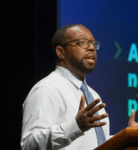
Project Title: Black Youth and Changing
Researcher Bio:
Justin Zimmerman, University at Albany
Justin Zimmerman is an assistant professor of American politics at UAlbany. His area of concentration is Black politics and Urban politics. His research aims to understand how Black Chicagoans work with institutions and neighbors they distrust to pursue common policy goals – in this case, to remedy state and community violence. His research on trust and coalition building was recently published in Politics, Groups, and Identities, and his current book project will consider the coalitions, motivations, and compromises made by Black Chicagoans in their fight for safer communities. Justin received his PhD from Northwestern University in 2023. He also is a proud alum of the University of Alabama where he received a Bachelor of Arts in political science and philosophy in 2009 and a Master of Public Administration with a concentration in organizational management in 2011. Prior to pursuing a career in academia, Justin resided in Washington, D.C., where he supported the Department of Treasury as an acquisitions consultant with Octo Consulting Group and served in multiple roles with the Department of State.