
2026 Recipients of the APSA Lee Ann Fujii Diversity Fellowship Program Travel Grant
APSA is pleased to announce the recipients of the 2026 APSA Lee Ann Fujii Diversity Fellowship Program Travel Grant. This grant was made possible by the generous contributions of the Fujii Family and Dr. Fujii’s colleagues and friends.
- Chase Brown, George Washington University
- Samantha Canty, University of California, Irvine
- Norris Davis, University of California, Berkeley
- Lindsey González, Texas A&M University
- Sekou Jabateh, University of California, Berkeley
- Maya Khuzam, University of Michigan
- Alesha Lewis, University of Illinois at Urbana-Champaign
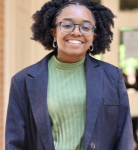
Chase Brown is a second-year PhD student at George Washington University and an alumni of Rice University, where she graduated with a double major in political science and Spanish, and a minor in African American politics. Currently she studies American politics and research methods. She was inspired to pursue a PhD in order to combine her leadership experience from the Black Student Association with her policy research experience developed during her work in a policy research program in 2022. Particularly, Chase has an interest in how intersectional identity plays a role in social movements, political organizing, and racial politics. She is currently working on a paper studying the partisan factors which influence support for gender-affirming care for transgender individuals, which she will present at the 2026 APSA Conference on the panel Public Opinion and Contemporary Trans Politics. She also will be serving as a discussant this year for the panel Blackness and Democratic Construction. Chase has dedicated her research agenda in graduate school to producing research which solves the problems that affect intersectionally marginalized communities. She loves connecting with other people, and welcomes interested scholars and advocates to reach out to her at chaseb@gwmail.gwu.edu.

Samantha Canty is a first-year Chancellor’s postdoctoral scholar at the Ralph Bunche Center at the University of California, Los Angeles. She received both her master’s degree and Ph.D. in political science from the University of California, Irvine. She holds a bachelor’s degree in economics from Florida Gulf Coast University. Her research interest include Black feminism, Black politics and political thought, political behavior, public opinion, and identity politics. While drawing off previously established Black feminist theories her recent research offers a contemporary understanding of the non-traditional political tools used by Black women that define their unique political behavior. Her book project, entitled Sister Synergy, develops a theoretical and quantitative understanding that Black women’s robust political practices and traditions are in direct response to the experiences that being on the social, political, and economic margins produces. She demonstrates that Sister Synergy is politically leverageable and associated with increased political engagement, political activism and higher levels of efficacy. She is the recipient of UCI’s Kathy Alberti Future Teaching Award, UCI’s Chancellor’s fellowship, and her research has been supported by UCI’s, Center for Liberation, Anti-Racism & Belonging, Black Girls Vote, and The American Political Science Association. She is currently in the process of publishing two papers; the first focuses on mass defense strategies used by radical Black organizations in defense of their communities and the other investigates political exhaustion amongst Black women.
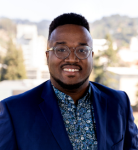
Norris Davis III is a PhD candidate of political science at the University of California, Berkeley. Norris is a scholar of Black politics and media, and his dissertation project draws on counterpublic theory, linked fate frameworks, and content analysis to trace the history of Black media as it intersects the political and the entertaining, examining how this shapes the ideological landscape of political information communities receive and how it informs political attitudes and socialization. Norris is an American Political Science Association Diversity Fellow. He graduated summa cum laude from the University of Alabama.

Lindsey González is a PhD candidate in political science at Texas A&M University. Her research lies at the intersection of race and public opinion in the United States, with a particular focus on Latino politics. Her dissertation investigates how Latinos’ diverse racial identities and racial traits shape their political solidarity with out-groups, especially through attitudes toward discrimination, public policies, and social movements. Her additional research examines voter preferences and immigration politics in the U.S. Lindsey holds a B.A. and M.P.A. from the Bush School of Government and Public Service at Texas A&M University and is a member of the APSA Diversity Fellowship program. With the support of this grant, she will attend the 2026 APSA annual meeting, where she will present her ongoing research on policy enforcement and political solidarity in the U.S.
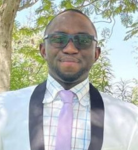
Sekou Jabateh is a PhD student in political science at the University of California, Berkeley, with a regional focus on sub-Saharan Africa. His research combines experimental methods and observational causal inference to examine the micro-underpinnings of conflict, the genesis and impacts of political violence, and the dynamics of interethnic and intergroup reconciliation in post-conflict societies. His co-authored paper on interethnic monetary transfers and prejudice reduction in post-war Liberia is conditionally accepted at the American Political Science Review. He also has a manuscript under review at Comparative Political Studies, a working paper on subnational ethnic polarization and wartime violence in Liberia, and another working paper on economic and political exclusion and the rise of contentious actions and insurgent groups in Senegal. His dissertation agenda explores how post-war African societies balance preserving memory and promoting reconciliation after ethnically driven political violence and civil conflict, and his 2026 APSA presentation is a component of this broader project. Sekou is a recipient of the prestigious Berkeley Fellowship, NYU Abu Dhabi’s distinguished Post-Graduation Research Fellowship, Princeton University’s Public Policy and International Affairs Fellowship, and the American Political Science Association’s Diversity Fellowship. His research and professional development have been generously supported by all four institutions.

Maya Khuzam is a dual PhD candidate of political science and scientific computing at the University of Michigan, Ann Arbor. Her research interests include race, religion, gender, and sexuality in political attitudes, political psychology, and health politics. Her dissertation project explores the role of religion in shaping Middle Eastern and North African (MENA) American political identity and behavior. The Lee Ann Fujii Travel Grant will enable Maya to travel to the 2026 APSA Annual Meeting where she will present a portion of her dissertation work investigating MENA voting behavior in the 2024 U.S. presidential election. Her co-authored published work can be found in Qualitative Health Research and Culture, Health, & Sexuality. Prior to her studies, she worked as a research assistant studying journalism and media at Pew Research Center. She is also a proud alumna of the University of California, Los Angeles, where she received a Bachelor of Arts in Political Science with a minor in Arabic and Islamic Studies.
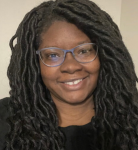
Alesha Lewis is a PhD candidate at the University of Illinois at Urbana-Champaign. Broadly, her research interests consist of political psychology and racial/ethnic politics. Her primary strand of research focuses on the relationship between political behavior and racial trauma in African Americans. Using a mix of data from semi-structured interviews, observational surveys, a survey experiment, and a field experiment, she demonstrates that racial trauma is linked to trust, efficacy, and political participation in a way that is distinct from mere exposure to racial discrimination. Additionally, her work investigates why certain individuals develop trauma symptoms in response to prolonged exposure to discrimination, and how political participation may function as a healthy coping mechanism for racial trauma. Her research has been supported by the American Political Science Association’s (APSA) Diversity Fellowship Program, APSA’s Centennial Center for Political Science and Public Affairs, the Cline Center for Advanced Social Research at the University of Illinois, and the Institute for Humane Studies. She will be on the 2026-27 job market and will be presenting her research at the 2026 APSA Annual Meeting, courtesy of the Lee Ann Fujii Diversity Fellowship Program Travel Grant.