
Fund for Latino Scholarship Recipients
APSA awarded the following individuals and institutions the 2025 Fund for Latino Scholarship award:
- Rebeca Agosto Rosa, University of Illinois at Urbana-Champaign
- Eduardo Burkle, University of Georgia
- Jaime Carbajal, University of Texas at Austin
- Raisa Castro, Georgia State University
- Annabella Espana-Najera, California State University, Fresno
- Martín Gou, Vanderbilt University
- Raymundo Lopez, Michigan State University
- Geidy Mendez, University of California-Irvine
- Melanie Perez, Florida International University
- Diana Alejandra Sánchez Romero, Universidad Autonoma Metropolitana
- Caroline de Lima e Silva, University Diego Portales
- Sonia Vargas, University of Maryland
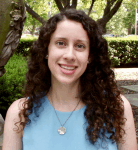
Rebeca J. Agosto Rosa is a Ph.D. candidate in the political science department at the University of Illinois Urbana-Champaign. As a political psychologist, she is interested in how identity, intergroup contact, and the media influence political attitudes and behavior. Her dissertation examines how Spanish-language content in the media shapes intergroup attitudes in the U.S., drawing attention to non-political media’s political consequences. The APSA Fund for Latino Scholarship will help her replicate and extend her preliminary findings. Agosto Rosa holds a master’s degree in political science from UIUC and a bachelor’s degree in political science and journalism from the University of Puerto Rico, Río Piedras.

Eduardo Burkle is a Ph.D. student at the University of Georgia. His research interests include human rights, political violence, peacekeeping, and transitional justice. Eduardo is also part of the Human Rights Measurement Initiative (HRMI), where he focuses on measurement questions in political science and works with a team that produces annual data on civil and political rights. The APSA Fund for Latino Scholarship will support data collection for his current research project on how reparations programs from transitional justice efforts influence citizens’ perceptions of victims of human rights violations in Latin America. This project is part of a broader research agenda focused on investigating public opinion and human rights, combining a range of research methodologies, including survey and experimental designs.
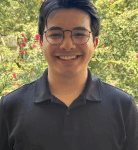
Jaime Andres Carbajal is a Ph.D. student studying American politics and political methodology in the Department of Government at the University of Texas at Austin. Using experimental methods, his research focuses on public opinion and voting behavior from marginalized groups, such as Latinos, African Americans, and women. Much of Jaime’s work is created using hypothetical candidates, vignettes, and AI-generated photos. With these materials, Jaime analyzes how voters respond to specific candidate characteristics, whether related to physical appearance or political behavior. With the support of the Fund for Latino Scholarship, Jaime plans to continue collecting data on these marginalized groups, expanding his line of research, and sharing his findings at various political science conferences.

Raisa Castro-Ávila is a second-year Ph.D. student in political science at Georgia State University, specializing in comparative politics and public law. Her research examines how Latin American courts define and adjudicate rape, with a focus on how victim characteristics and institutional norms shape judicial decision-making. Drawing on an original dataset of Supreme Court rulings from Ecuador, Colombia, Uruguay, and Costa Rica, her work seeks to understand how legal systems respond to gender-based violence. With support from the APSA Fund for Latino Scholarship, Raisa will expand her project to include post-2018 rulings, additional countries, and lower-court decisions. As a Latina originally from Ecuador, she brings both scholarly rigor and personal insight to her research, aiming to contribute to legal reform and amplify the voices of survivors.

Raymundo Lopez is a PhD candidate in the department of political science at Michigan State University. His research leverages video-as-data from U.S. Congressional floor speeches to evaluate how members of Congress negotiate and perform their social identities in real time—when they invoke them, how they describe them, and in what combinations. The Fund for Latino Scholarship will support efforts to launch an online survey experiment in a dedicated chapter of his dissertation. Ray is committed to public scholarship and digital storytelling. He is the founder of Atom Laboratories, a YouTube channel that translates political science research into accessible video essays, candidate profiles, and analyses of contemporary political issues. His work bridges scholarship and practice, with the goal of broadening civic understanding and fostering inclusive political discourse. Lopez is a Stanford University, USC POIR Predoctoral Summer Institute and Ronald McNair alum.

Melanie Rae Perez is a PhD candidate in international relations at Florida International University. Her research examines the intersections of religion, politics, and global justice with a focus on transregionalism and imagined communities. Specifically, she explores the historical and contemporary connections between the Middle East and Latin America, highlighting how religious and diasporic networks shape political solidarities and international relations.
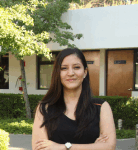
Diana Alejandra Sánchez Romero is an assistant professor at Universidad Autónoma Metropolitana in Mexico City and holds a master’s degree in political science from Centro de Investigación y Docencia Económicas (CIDE). Her research focuses on corruption, elections, and democracy, with a particular interest in the impact of digital tools on community development and democratic governance. Beyond academia, Diana is an organizer of RLadies México, where she explores network analysis and package development while supporting the organization’s mission to promote gender diversity in the R community. The grant awarded by the APSA Fund for Latino Scholarship will support the quantitative and qualitative data collection for her project on computational propaganda in the Mexican judicial election.

Sonia Vargas is a fifth-year PhD student in government and politics at the University of Maryland in American politics, and methodology subfields. Her research centers on immigrant generation, political socialization, and political attitudes, with a dissertation exploring how Latinxs display variation in political attitudes across immigrant generation status. The Fund for Latino Scholarship will support her attendance in the 2025 APSA Annual Meeting and in development of her dissertation project.